Visualizzazione post con etichetta Italian Art. Mostra tutti i post
Textual description of firstImageUrl

Pier Paolo Pasolini: Solitudine

Bisogna essere molto forti
per amare la solitudine; bisogna avere buone gambe
e una resistenza fuori dal comune; non si deve rischiare
raffreddore, influenza e mal di gola; non si devono temere
rapinatori o assassini; se tocca camminare
per tutto il pomeriggio o magari per tutta la sera
bisogna saperlo fare senza accorgersene; da sedersi non c’è;
specie d’inverno; col vento che tira sull’erba bagnata,

Antonio Nunziante

Textual description of firstImageUrl

Salvatore Quasimodo: "Ho tutta l'anima incrinata di brividi di stelle"

Ho tutta l'anima incrinata di brividi di stelle.
Trillano ancora dei grilli lungo i lembi verderame dei fossati polverosi, e dai pantani melmosi scoppiano cori lontani di rane arrochite.
Il silenzio intorno a quel pino bagnato d'ombra, che ogni sera al vespro china mesto il capo, dopo aver sorriso a l'ultima vampata di sole, mi succhia l'anima ai ricordi.
Sento ancora il volitare vellutato dei lapilli d'un mucchio morbido di sogni, incenerito una sera lontana sotto l'archetto di platino dorato de la luna.


Textual description of firstImageUrl

Lucia Sarto, 1950 | Romantic painter

Lucia Sarto is an acclaimed Italian painter known for her romantic, impressionistic style that blends vibrant color with poetic light.
Based in Lignano Sabbiadoro (Udine), her work has gained international recognition with over a hundred exhibitions, including numerous personal shows across Europe, Japan and the United States.
Her art background comes from Venice and Turin, the city where she participated in her first important group exhibitions.
She has over one hundred exhibitions in Italy and abroad.


Textual description of firstImageUrl

Caravaggio | The Lute Player / Suonatore di Liuto, 1595-1596

The Lute Player is an early work by Caravaggio, who sought above all to convey the reality and solidity of the surrounding world.
We can already see the elements of the artist's style which were to have such a widespread influence on other artists.
The figure of a young boy dressed in a white shirt stands out clearly against the dark background.
The sharp sidelighting and the falling shadows give the objects an almost tangible volume and weight.
Caravaggio was interested in the uniqueness of the surrounding world, and there are markedly individual features not only in the youth's face but also in the objects which make up the still life: the damaged pear, the crack in the lute, the crumpled pages of the music.
The melody written on those pages is that of a then fashionable song by Jacques Arcadelt, "You know that I love you".

Caravaggio | The Lute Player | The Hermitage version, 1595-1596

Textual description of firstImageUrl

Caravaggio | Saint John the Baptist in the wilderness, 1604

"Saint John the Baptist in the Wilderness" by Caravaggio, is a Baroque period painting on display at The Nelson-Atkins Museum of Art in Kansas City, Missouri.
This masterpiece, one of the Museum’s greatest treasures, is one of only a few original works by Caravaggio in American collections.
Although he never took in pupils, Caravaggio’s enormous influence on other artists played a vital role in the development of the Italian Baroque.
In this Saint John the Baptist, Caravaggio has traded idealism for what oftentimes became in his own time a controversial realism.


Textual description of firstImageUrl

Giorgio de Chirico. The Song of Love, 1914

"M. Giorgio de Chirico has just bought a pink rubber glove" - so wrote the French poet Guillaume Apollinaire in July of 1914, noting the purchase because, he went on to say, he knew the glove’s appearance in de Chirico’s paintings would add to the works’ uncanny power.
Implying human presence, as a mold of the hand, yet also inhuman, a clammily limp fragment distinctly unfleshlike in color, the glove in The Song of Love has an unsettling authority.


Textual description of firstImageUrl

Gaetano Bellei (1857-1922)

Dopo la formazione artistica all'Accademia delle Belle Arti di Modena, sotto la guida di Adeodato Malatesta, Il maestro Accademico Italiano Gaetano Bellei si trasferisce a Roma, dove frequenta l'accademia di San Luca, successivamente quella di Francia ed in contemporanea, quella spagnola.
Nel 1883 frequenta Firenze per un anno, dove porta a fine il proprio pensionato artistico.
Nella città toscana entra in contatto, per il suo eclettismo, con collezionisti, mercanti e mecenati di origine inglese per lo più, che gli commissionano varie tipologie di opere.


Textual description of firstImageUrl

Guido Reni | The Head of a Woman Looking Up (Judith), 1625-26

Striking for its coloristic richness -a pictorial quality imparted by the combination of red and black chalk- this head of a young woman is a preparatory study for Reni's painting Judith and Holofernes, a celebrated and much replicated composition.
The present study was most probably derived from life, to judge from the bold immediacy of the contours and the quick zig-zagging of the parallel hatching of the shading.

Guido Reni | The Head of a Woman Looking Up (Judith), 1625-26 | Metropolitan Museum of Art

Textual description of firstImageUrl

Leonardo da Vinci e Michelangelo

Il rapporto tra i due geni del Rinascimento, Leonardo da Vinci (1452-1519) e Michelangelo Buonarroti (1475-1564), fu difficile, spesso teso, a causa della differenza generazionale (Michelangelo era di 23 anni più giovane di Leonardo), ma soprattutto, per via dei caratteri diversi e degli ideali artistici inconciliabilmente lontani: il primo fu riflessivo, poliedrico e interessato al mondo naturale; il secondo più impulsivo, notoriamente riottoso ed idealista.
Non vi sono prove dirette della loro inimicizia, ma svariati indizi e testimonianze indirette.


Textual description of firstImageUrl

Michelangelo Buonarroti | Sculpture

Michelangelo's (1475-1564) earliest sculpture was made in the Medici garden near the church of San Lorenzo; his Bacchus and Sleeping Cupid both show the results of careful observation of the classical sculptures located in the garden.
His later Battle of the Lapiths and Centaurs and Madonna of the Stairs reflect his growing interest in his contemporaries.


Textual description of firstImageUrl

Master of the Story of Griselda (active 1490-1500)

The Master of the Story of Griselda was an Italian artist who specialized in panel paintings.
He worked in Umbria around 1490 and probably spent time in Siena.
There is no evidence of him after 1500.
He received his notname from a group of paintings depicting the story of Griselda, as recounted by Giovanni Boccaccio in his Decameron.

Master of the Story of Griselda | Joseph of Egypt or Eunustos of Tangara c.1493-4 | National Gallery of Art, Washington

Textual description of firstImageUrl

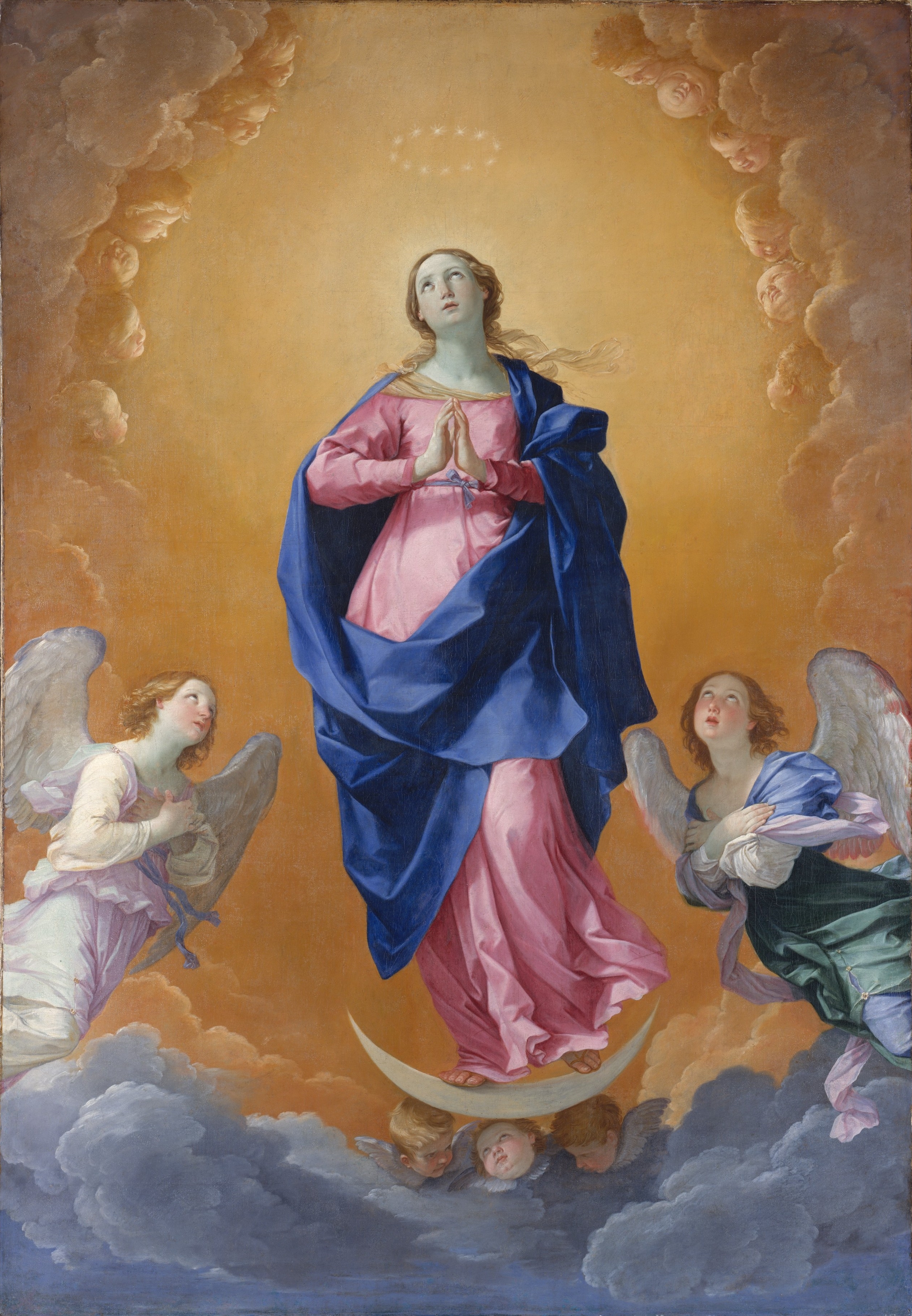
Guido Reni | The Immaculate Conception, 1627

Guido Reni (Bologna, 1575-1642), the most celebrated painter of seventeenth-century Italy, was particularly famous for the elegance of his compositions and the beauty and grace of his female heads, earning him the epithet “Divine".
This altarpiece, with its otherworldly space shaped by clouds and putti in a high-keyed palette, was commissioned in about 1627 by the Spanish ambassador in Rome for the Infanta of Spain.

Guido Reni | The Immaculate Conception, 1627 | Metropolitan Museum of Art

Textual description of firstImageUrl

Francesco Bacchiacca | Portrait of a young lady holding a cat, 1525-30


A Florentine painter and draughtsman, Francesco d'Ubertino Verdi, called Bacchiacca (1494-1557) is chiefly recognized as an artist who helped evolve the style of Mannerism.
He is said to have studied with Umbrian painter, Pietro Perugino (1446-1524) and also collaborated with other artists of the time such as Franciabigio (1482-1525) and Pontormo (1494-1557).

Textual description of firstImageUrl

Francesco Hayez | Pittore romantico

Francesco Hayez (1791-1882) nacque in una famiglia di condizioni modeste.
Il padre Giovanni era di origini francesi; la madre, Chiara Torcella, veniva da Murano.
Il piccolo Francesco, ultimo di cinque figli, venne affidato ad una sorella della madre che aveva sposato Giovanni Binasco, armatore e mercante d'arte proprietario di una discreta collezione di dipinti.
Già da piccolo mostrò una predisposizione per il disegno e lo zio lo affidò ad un restauratore affinché ne imparasse il mestiere.


Textual description of firstImageUrl

Salvatore Postiglione | Pittore di genere della Belle Époque

Salvatore Postiglione (Napoli, 1861-1906) è stato uno dei pittori Napoletani più dotati nel periodo storico coincidente con la Belle Époque.
Salvatore Postiglione, nato a Napoli il 20 dicembre 1861, apparteneva ad una famiglia di artisti.
Fratello di Luca Postiglione, anch'egli pittore, Salvatore apprese i primi rudimenti dal padre Luigi - pittore di quadri religiosi che lo lasciò prematuramente orfano - e dallo zio Raffaele, valente disegnatore, studioso delle opere di Raffaello Sanzio e professore all'Accademia di belle arti di Napoli, dove Salvatore frequentò anche le lezioni di Domenico Morelli.


Textual description of firstImageUrl

Ippolito Caffi, tra Venezia e l’Oriente

Arte e vita di Ippolito Caffi

Dai bagliori delle vedute al clamore delle battaglie.

Sarà a Roma, dove giunge nel 1832 - abbandonato il "soffocante" ambiente dell’Accademia di Venezia che frequentava dal ’27 - che Caffi imbocca definitivamente la strada del vedutismo raggiungendo ben presto un’autonomia creativa che lo porta a rapido e sicuro successo.


Textual description of firstImageUrl

Vittorio Corcos | I sogni della Belle Époque

Vittorio Matteo Corcos (1859-1933) naque a Livorno da una modesta famiglia ebraica. Studia qui con il pittore Giuseppe Baldini, poi all’Accademia di Belle Arti di Firenze con Enrico Pollastrini (1875-78) e, grazie a una borsa del Comune di Livorno, a Napoli con Domenico Morelli (1878).
Dal 1880, per 6 anni, è a Parigi, dove presto firma un lungo contratto con la famosa galleria Goupil e frequenta prima il pugliese Giuseppe de Nittis, poi lo studio del ritrattista Léon Bonnat.


Textual description of firstImageUrl

Peter Demetz, 1969 | Hyperrealistic wood sculptor

Peter Demetz is best known for his incredibly realistic hand-carved sculptures of people, caught in contemplative, in-between moments.
His installations push beyond the framework of daily life, capturing the simple gestures and unique poses of his subject.
Peter Demetz was born in Bolzano-Italy and lives and works in Ortisei (BZ).


Textual description of firstImageUrl

Salvatore Quasimodo | Estate / Summer

Cicale, sorelle, nel sole
con voi mi nascondo
nel folto dei pioppi
e aspetto le stelle.

Peder Severin Krøyer | Summer Evening at Skagen Beach, The Artist and his Wife, 1899

Textual description of firstImageUrl

Fabio Cipolla | Orientalist painter

Fabio Cipolla (1852-1935) was a distinguished Italian painter of genre scenes and "costume paintings".
He trained at the Academy of Fine Arts in Rome and his works were published in various periodicals.
He made his first appearance at the exhibitions in Milan in 1879 and in Turin in 1880, and in the following years he developed the adoption of a mannered narrative realism on genre subjects.
Fabio Cipolla lived and worked in Rome all his life.