Textual description of firstImageUrl

Edgar Degas | Combing the Hair, 1896

Women combing their hair, or having it combed, often appear in Degas’s work - for example, in his early Beach Scene, also in the National Gallery.
This late painting is one of his boldest treatments of the subject.
Here, a maid, wearing her servant’s uniform, combs the hair of her seated mistress, who is not yet fully dressed and who may also be pregnant.


Textual description of firstImageUrl

Edgar Degas | Portrait of Estelle Musson Degas, 1872

Edgar Degas arrived in New Orleans in 1872 for an extended stay, two years after he had enlisted in the National Guard during the Franco-Prussian War, and two years before he would join a group of painters back in Paris for the first of what would become known as the Impressionist Exhibitions.
It was a pivotal time in his career, one that brought to the fore many important familial, artistic, and personal connections.


Textual description of firstImageUrl

Claude Monet | The Japanese Bridge, 1900

In 1883, Claude Monet moved to Giverny, about forty miles northwest of Paris.
For the rest of his life, he devoted himself to painting and tending his gardens, which included the Japanese footbridge in this picture.
His style became more expressive as he piled thick pigments layer upon layer in ever more intense colors that often didn’t correspond to reality (possibly because his eyesight was failing).
Giving up any desire to record minute details, he wove tangled skeins of paint with bold strokes, seeming more concerned with nature’s mysteries than with mere appearance.


Textual description of firstImageUrl

Joseph Wright of Derby | A view of Vesuvius from Posillipo, Naples

From: Art Gallery of South Australia

Joseph Wright (1734-1797) began his career as one of Britain foremost portrait painters, but, following a visit to Italy between 1773 and 1775, he turned his gaze to landscape painting, becoming recognised for his deep understanding and exploration of light.
Wright visited the Bay of Naples in 1774, finding its awe-inspiring view of Mount Vesuvius particularly moving.


Textual description of firstImageUrl

Édouard Manet | Young Lady in 1866, 1866

Manet’s model, Victorine Meurent, had recently posed as the brazen nudes in Olympia and Luncheon on the Grass (both Musée d’Orsay, Paris).
Here, appearing relatively demure, she flaunts an intimate silk dressing gown.
Critics eyed the painting as a rejoinder to Courbet’s Woman with a Parrot and as indicative of Manet’s "current vice" of failing to "value a head more than a slipper".


Textual description of firstImageUrl

Carolus-Duran | Portrait of Édouard Manet, 1880

Carolus-Duran (1837-1917), a successful society portraitist, painted this informal view of his friend Édouard Manet (1832-1883) at a villa outside of Paris.
Manet was known for his impeccable grooming, but Carolus-Duran portrays him in a moment of ease, flushed by the effects of a warm afternoon, wearing a straw boater pushed back on his forehead.

Carolus Duran | Portrait of Édouard Manet, 1880 | Paris, Musée d'Orsay

Working quickly, he captures Manet’s appearance and mood with broad, summary strokes, painting him “à la Manet”-employing his friend’s loose brushwork rather than his own tighter style. | Source: © RISD Museum of Art

Textual description of firstImageUrl

Claude Monet | The Artist's Garden at Giverny, 1900

The Artist's Garden at Giverny (French: Le Jardin de l'artiste à Giverny) is an oil on canvas painting by Claude Monet done in 1900, now in the Musée d'Orsay, Paris.
It is one of many works by the artist of his garden at Giverny over the last thirty years of his life.
The painting shows rows of irises in various shades of purple and pink set diagonally across the picture plane.


Textual description of firstImageUrl

John Gulich | A Violin Concerto, 1898

John Percival Gülich (also Gulich) (1864-1898) was a British illustrator, engraver and artist.
Gülich was born in Wimbledon in 1864, the son of Hermann Gülich, a London merchant of German origin, and Eleanor. He was educated at Charterhouse School.
He lived in Bremen for five years, working in his father's office.
He became Art Editor of the illustrated newspapers The Pictorial World and The Graphic, and also contributed to Harper's Magazine.

John Gulich | A Violin Concerto, 1898 | Tate

Textual description of firstImageUrl

Meteyard / Tennyson | The Lady of Shalott

Sidney Harold Meteyard RBSA (1868-1947) was an English art teacher, painter and stained-glass designer.
A member of the Birmingham Group, he worked in a late Pre-Raphaelite style heavily influenced by Edward Burne-Jones and the Arts and Crafts Movement.
His best-known painting - I am half sick of shadows, said the Lady of Shalott (1913), based on the poem The Lady of Shalott (1832) by Lord Alfred Tennyson (1809-1892) - is in the collection of Birmingham Museum and Art Gallery.
In this piece The Lady of Shalott is at her tapestry with a wedding couple reflected in her mirror.

Sidney Harold Meteyard (1868-1947) | I am Half-Sick of Shadows - Said the Lady of Shalott, 1913

Textual description of firstImageUrl

Richard Westall | The Reconciliation of Helen and Paris.., 1805

Richard Westall RA (1765-1836) was an English painter and illustrator of portraits, historical and literary events, best known for his portraits of Byron.
He was also Queen Victoria's drawing master.
Westall was the more successful of two half-brothers (both sons of a Benjamin Westall, from Norwich) who both became painters.
His younger half-brother was William Westall (1781-1850), a much-travelled landscape painter.

Richard Westall | The Reconciliation of Helen and Paris after his Defeat by Menelaus, 1805

Textual description of firstImageUrl

Alberto Moravia: "L'invidia è come una palla di gomma.."

"A Roma è avvenuto il contrario di quello che avviene nelle altre capitali: la città si è ingrandita e arricchita; ma è rimasta legata a un’idea del vivere elementare e grossolana. Cinica, scettica, priva di ideali, materiale, ottusa, Roma presenta insomma lo spettacolo sconcertante di una capitale il cui fine principale anzi unico sia quello di vivere alla giornata o meglio di sopravvivere".

Renato Guttuso | Portrait of Alberto Moravia, 1982

Textual description of firstImageUrl

Charles Courtney Curran

Charles Courtney Curran was an American painter, best known for his canvases depicting women in various settings.
Curran was born in Hartford, Kentucky, where his father taught school.
A few months later after the beginning of the Civil War, the family left there and returned to Ohio, eventually settling in Sandusky on the shores of Lake Erie where the elder Curran served as superintendent of schools.


Textual description of firstImageUrl

Chul-Hwan Park, 1964 | Still Life painter

Chul-Hwan Park is a Korean Still Life painter of flowers, with a Master of Painting from Hongik University Graduate School of Fine Arts in Seoul, Korea.
Park’s still-life paintings are of such vivid realism that one nearly expects his flower blooms to exude a fragrance like their real-life counterparts.
One recalls the legendary Korean painter Solgeo, whose painting of a pine tree on a temple wall was so real that it lured birds to nest. Like Solgeo, Park is a true artist of realism.


Textual description of firstImageUrl

John Lennon: “Love is the flower you’ve got to let grow”

"Love is the flower you’ve got to let grow".
John Lennon

"Love is like wildflowers; it’s often found in the most unlikely places".
"L’amore è come i fiori di campo; si trova spesso nei posti più improbabili".
Ralph Waldo Emerson


Textual description of firstImageUrl

Marc Chagall | Parigi dalla mia finestra, 1913

C'è l'Opéra, il Louvre, L'Arc de Triomphe, Notre-Dame, la Tour Eiffel, il Panthéon, Place de la Concorde, Saint-GermainDes-Pres. Esplodono in arancioni, verdi, blu, viola, rossi.
Ci volteggiano sopra amanti, animali, madri, fiori, angeli.
Chagall non smise mai di ricordarla, di trasfigurarla nei suoi sogni, di farla orizzonte su cui si mimetizzava tutto il suo immaginario intimo e poetico.
C'è la città con i suoi luoghi simbolici, e c'è il pittore con la sua storia, i suoi miti. Parigi evoca e accoglie al tempo stesso, si fa materia onirica nello sguardo di Chagall.


Textual description of firstImageUrl

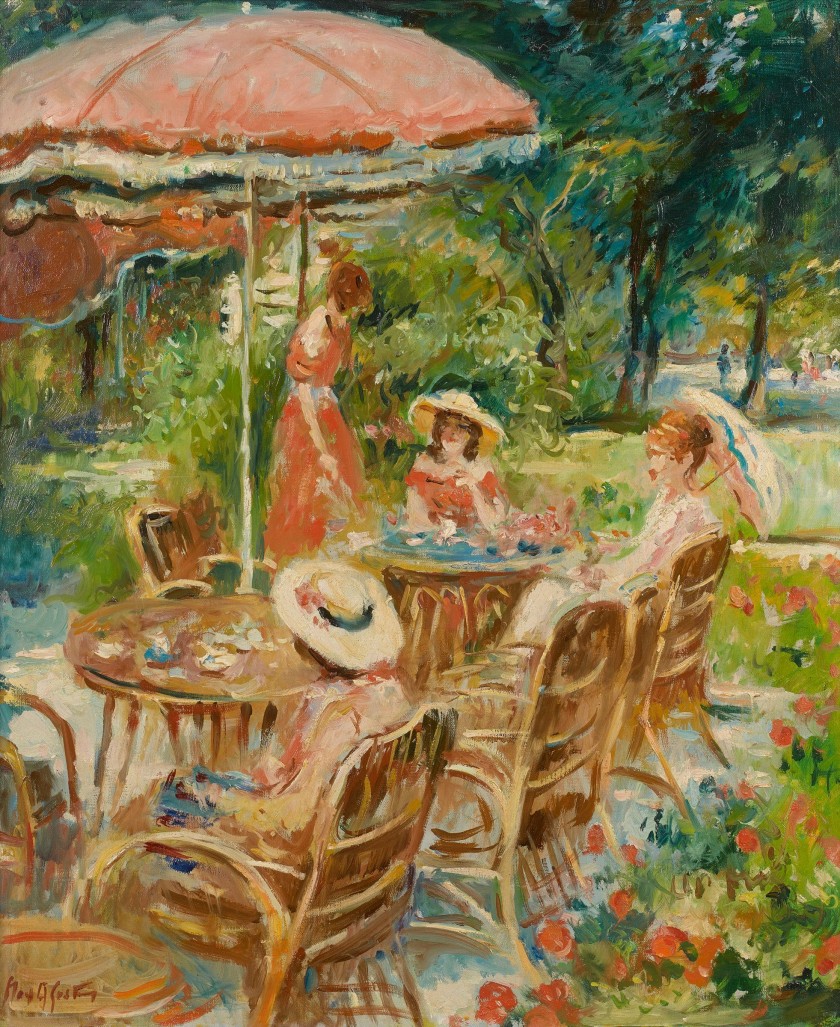
Max Agostini | Impressionist painter

Max Michel Agostini (1914-1997), of Corsican origin from his grandparents, was born in 1914.
He discovered his talent for Impressionistic painting while studying at the Paris Beaux-Arts School.
Drafted into the French army for five years during the Second World War, Max-Agostini was a prisoner of war for three years.
During the postwar years, he was already recognized as an excellent portrait and landscape artist in Châteauroux, where he lived for several years.


Textual description of firstImageUrl

Co Breman | Dutch Palmzondag, Laren, 1914

Ahazueros Jacobus Breman, known as Co (1865-1938) was a Dutch painter.
He specialized in landscapes, farms and interior scenes, with figures, and was one of the first Pointillist painters in the Netherlands.
His father, Willem Fredrik Breman (1829-1875), owned a carpentry and blacksmithing shop. He had five siblings, including Evert Breman, a well-known architect.


Textual description of firstImageUrl

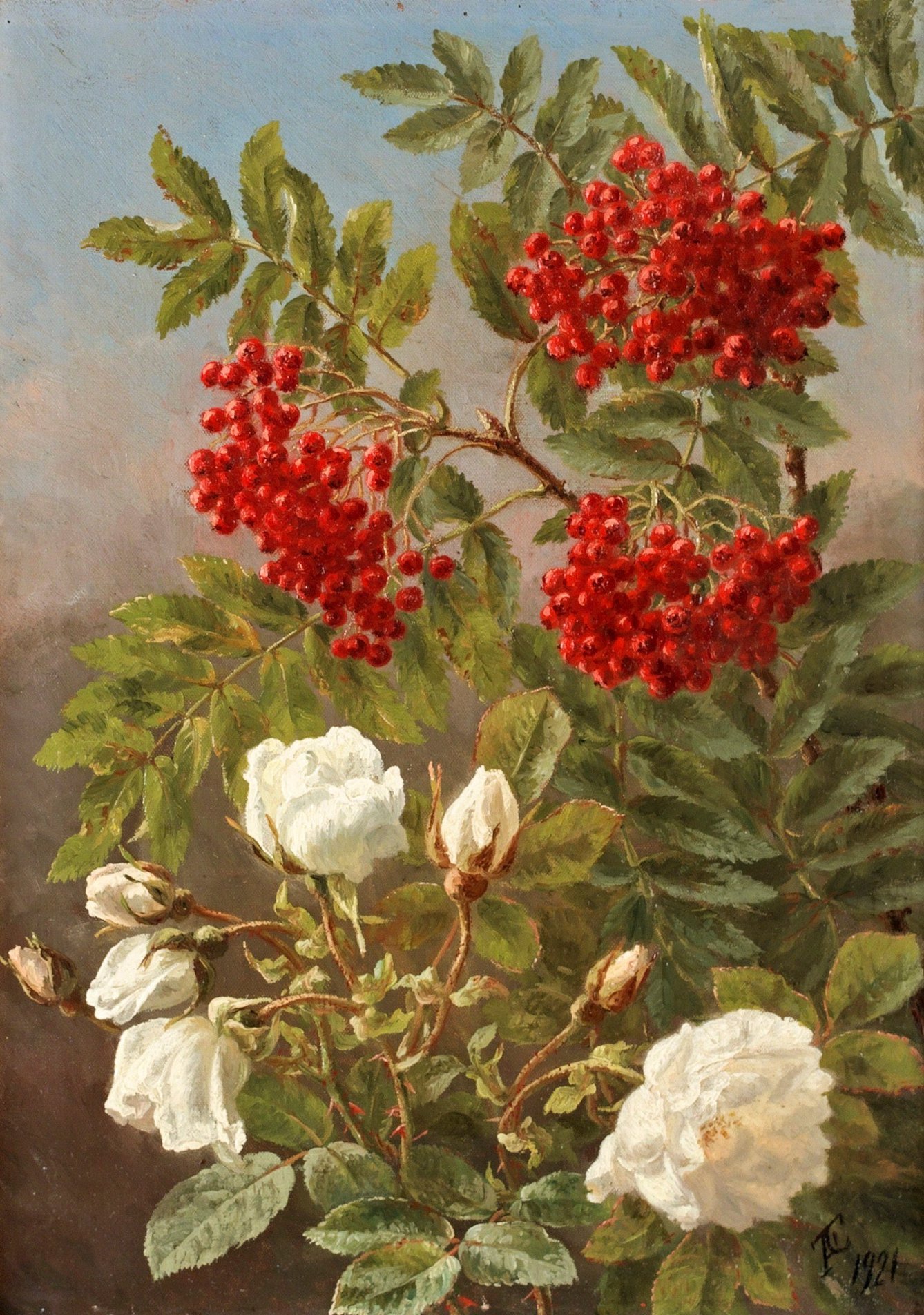
Anthonore Christensen | Flowers painter

Anthonie Eleonore Christensen (1849-1926), generally known as Anthonore Christensen, née Tscherning was a Danish flower painter.
She exhibited from 1867 at Charlottenborg, winning the medal of the year in 1893.
As a painting teacher, her students included Queen Louise and Queen Olga of Greece.


Textual description of firstImageUrl

Hafsa Idrees, 1992 | Finger painter

Hafsa Idrees is an Pakistani painter and writer born in Islamabad.
- "Art has always been close to my heart and even though I have not received a formal education in any particular genre, drawing/painting is an important part of my life. Since school, I have been experimenting with and enjoying different styles, media and techniques".
"I started with Arabic calligraphy at the age of 10 but I soon realized that I enjoyed painting and drawing too. My subjects then were things and people from my immediate surroundings but with time I started to explore different kinds of paints, pencils, materials and subjects".


Textual description of firstImageUrl

Lettera d'Amore di Balzac alla contessa Ewelina Hańska

Mio amato angelo
,
"Sono quasi pazzo di te, per quanto uno possa essere pazzo: non riesco a mettere insieme due idee che non ti interponi tra di loro.
Non riesco più a pensare ad altro che a te.
Nonostante me stesso, la mia immaginazione mi porta da te.
Ti afferro, ti bacio, ti accarezzo, mille delle carezze più amorose si impossessano di me.
Quanto al mio cuore, ci sarai sempre - moltissimo.

Ferdinand Georg Waldmuller | Portrait of Madame Ewelina Hańska, 1835