Textual description of firstImageUrl

Charles Dickens Quotes

"Lega un albero di fico nel modo in cui dovrebbe crescere, e quando sarai vecchio potrai sederti alla sua ombra".
"Evitate di rimanere a bocca chiusa con coloro ai quali avete aperto il vostro cuore".
"L'allegria e la contentezza abbelliscono in gran misura, e sono dei famosi conservanti dello sguardo giovanile".

Margaret Gillies | The Lost portrait of Charles Dickens found in South Africa (detail)

Read More

Charles Dickens Quotes

"Lega un albero di fico nel modo in cui dovrebbe crescere, e quando sarai vecchio potrai sederti alla sua ombra".
"Evitate di rimanere a bocca chiusa con coloro ai quali avete aperto il vostro cuore".
"L'allegria e la contentezza abbelliscono in gran misura, e sono dei famosi conservanti dello sguardo giovanile".

Margaret Gillies | The Lost portrait of Charles Dickens found in South Africa (detail)

Textual description of firstImageUrl

The Art of Photo manipulation


Photo manipulation dates back to some of the earliest photographs captured on glass and tin plates during the 19th century.
The practice began not long after the creation of the first photograph (1825) by Joseph Nicéphore Niépce who developed heliography and made the first photographic print from a photoengraved printing plate.

Read More

The Art of Photo manipulation


Photo manipulation dates back to some of the earliest photographs captured on glass and tin plates during the 19th century.
The practice began not long after the creation of the first photograph (1825) by Joseph Nicéphore Niépce who developed heliography and made the first photographic print from a photoengraved printing plate.

Textual description of firstImageUrl

Patrick Le Hech (French, 1965)


Illusionist photographer Patrick Le Hec'h began his training at the École d'Art Graphique Corvisart de Paris. On his release he worked briefly as an illustrator and graphic designer before accepting the artistic direction of a communications agency.
Inspired by the romantic and surreal, is detected in its early creations of the atmosphere that are visionary painters: Giorgio De Chirico 1888-1978, Tanguy, Bocklin, Delvaux and René François Ghislain Magritte, 1898-1967.
Invited to present his paintings at galleries renowned Parisian Avenue Matignon, rue du fg St Honore, at the Grand Palais, as well as Monte Carlo, Cannes, Palm Beach, Chicago or New York, his work now recognized as contained in number of private collections, earned him awards on the occasion of major arts events.

Patrick Le Hec'h | French photographic artists

Read More

Patrick Le Hech (French, 1965)


Illusionist photographer Patrick Le Hec'h began his training at the École d'Art Graphique Corvisart de Paris. On his release he worked briefly as an illustrator and graphic designer before accepting the artistic direction of a communications agency.
Inspired by the romantic and surreal, is detected in its early creations of the atmosphere that are visionary painters: Giorgio De Chirico 1888-1978, Tanguy, Bocklin, Delvaux and René François Ghislain Magritte, 1898-1967.
Invited to present his paintings at galleries renowned Parisian Avenue Matignon, rue du fg St Honore, at the Grand Palais, as well as Monte Carlo, Cannes, Palm Beach, Chicago or New York, his work now recognized as contained in number of private collections, earned him awards on the occasion of major arts events.

Patrick Le Hec'h | French photographic artists

Textual description of firstImageUrl

Kei Mieno, 1985

Kei Mieno 三重野慶 è un artista Giapponese🎨 nato a Hiroshima che dipinge professionalmente da oltre 10 anni.
Questo pittore è specializzato nell'iperrealismo e utilizza principalmente pittura ad olio per creare i suoi capolavori.


Read More

Kei Mieno, 1985

Kei Mieno 三重野慶 è un artista Giapponese🎨 nato a Hiroshima che dipinge professionalmente da oltre 10 anni.
Questo pittore è specializzato nell'iperrealismo e utilizza principalmente pittura ad olio per creare i suoi capolavori.


Textual description of firstImageUrl

Bev Jozwiak (American, 1953)


"Emotion plays an important part in every successful painting, so I choose only subjects that call to me and that gives my work energy and excitement" - Bev Jozwiak.
Award winning Artist Bev Jozwiak was born in Vancouver, Washington. She graduated from Western Washington University in 1976 with honors. Bev Jozwiak paints very directly, placing watercolor paint on the paper with very little mixing on the palette.
Bev Jozwiak has earned her signature status in the American Watercolor Society, the National Watercolor Society, Watercolor West and others, too numerous to mention.
She has been included in countless "Best of Art Books", including numerous times in the well know series by North Light, "Splash".
Has had a plethora of magazine articles, including one emagazine cover, the cover of Sept. 2017 North Light Watercolor Magazine, and the Cover of the Palette magazine in 2019.

Read More

Bev Jozwiak (American, 1953)


"Emotion plays an important part in every successful painting, so I choose only subjects that call to me and that gives my work energy and excitement" - Bev Jozwiak.
Award winning Artist Bev Jozwiak was born in Vancouver, Washington. She graduated from Western Washington University in 1976 with honors. Bev Jozwiak paints very directly, placing watercolor paint on the paper with very little mixing on the palette.
Bev Jozwiak has earned her signature status in the American Watercolor Society, the National Watercolor Society, Watercolor West and others, too numerous to mention.
She has been included in countless "Best of Art Books", including numerous times in the well know series by North Light, "Splash".
Has had a plethora of magazine articles, including one emagazine cover, the cover of Sept. 2017 North Light Watercolor Magazine, and the Cover of the Palette magazine in 2019.

Textual description of firstImageUrl

Oscar Wilde / Rene Magritte | Quotes / Aforismi

Rene Magritte | A la rencontre du plaisir | Christies

Avere avuto una buona educazione è un grande svantaggio. Ti esclude da tante cose.
Nulla invecchia come la felicità...
'Esperienza' è il nome che tutti danno ai propri errori.
«Come definiresti l'uomo malvagio?»
    «Quel tipo d'uomo che ammira l'innocenza».
    «E una donna malvagia?»
    «Quel tipo di donna di cui un uomo non si stanca mai».
«Dicono che, quando muoiono, gli americani buoni vanno a Parigi.»
    «Veramente? E dove vanno gli americani cattivi, quando muoiono?»
    «Restano in America».
Qual è la differenza tra la letteratura e il giornalismo? Oh! Il giornalismo è illeggibile e la letteratura non viene letta.
A dire il vero, se le classi inferiori non ci danno il buon esempio, a che cosa servono? Esse tuttavia sembrano essere assolutamente prive del senso di responsabilità morale.
A durare son soltanto le qualità superficiali. La natura più profonda di un uomo si scopre molto presto.
A questo mondo vi sono solo due tragedie: una è non ottenere ciò che si vuole, l'altra è ottenerlo. Questa seconda è la peggiore, la vera tragedia.

Read More

Oscar Wilde / Rene Magritte | Quotes / Aforismi

Rene Magritte | A la rencontre du plaisir | Christies

Avere avuto una buona educazione è un grande svantaggio. Ti esclude da tante cose.
Nulla invecchia come la felicità...
'Esperienza' è il nome che tutti danno ai propri errori.
«Come definiresti l'uomo malvagio?»
    «Quel tipo d'uomo che ammira l'innocenza».
    «E una donna malvagia?»
    «Quel tipo di donna di cui un uomo non si stanca mai».
«Dicono che, quando muoiono, gli americani buoni vanno a Parigi.»
    «Veramente? E dove vanno gli americani cattivi, quando muoiono?»
    «Restano in America».
Qual è la differenza tra la letteratura e il giornalismo? Oh! Il giornalismo è illeggibile e la letteratura non viene letta.
A dire il vero, se le classi inferiori non ci danno il buon esempio, a che cosa servono? Esse tuttavia sembrano essere assolutamente prive del senso di responsabilità morale.
A durare son soltanto le qualità superficiali. La natura più profonda di un uomo si scopre molto presto.
A questo mondo vi sono solo due tragedie: una è non ottenere ciò che si vuole, l'altra è ottenerlo. Questa seconda è la peggiore, la vera tragedia.

Textual description of firstImageUrl

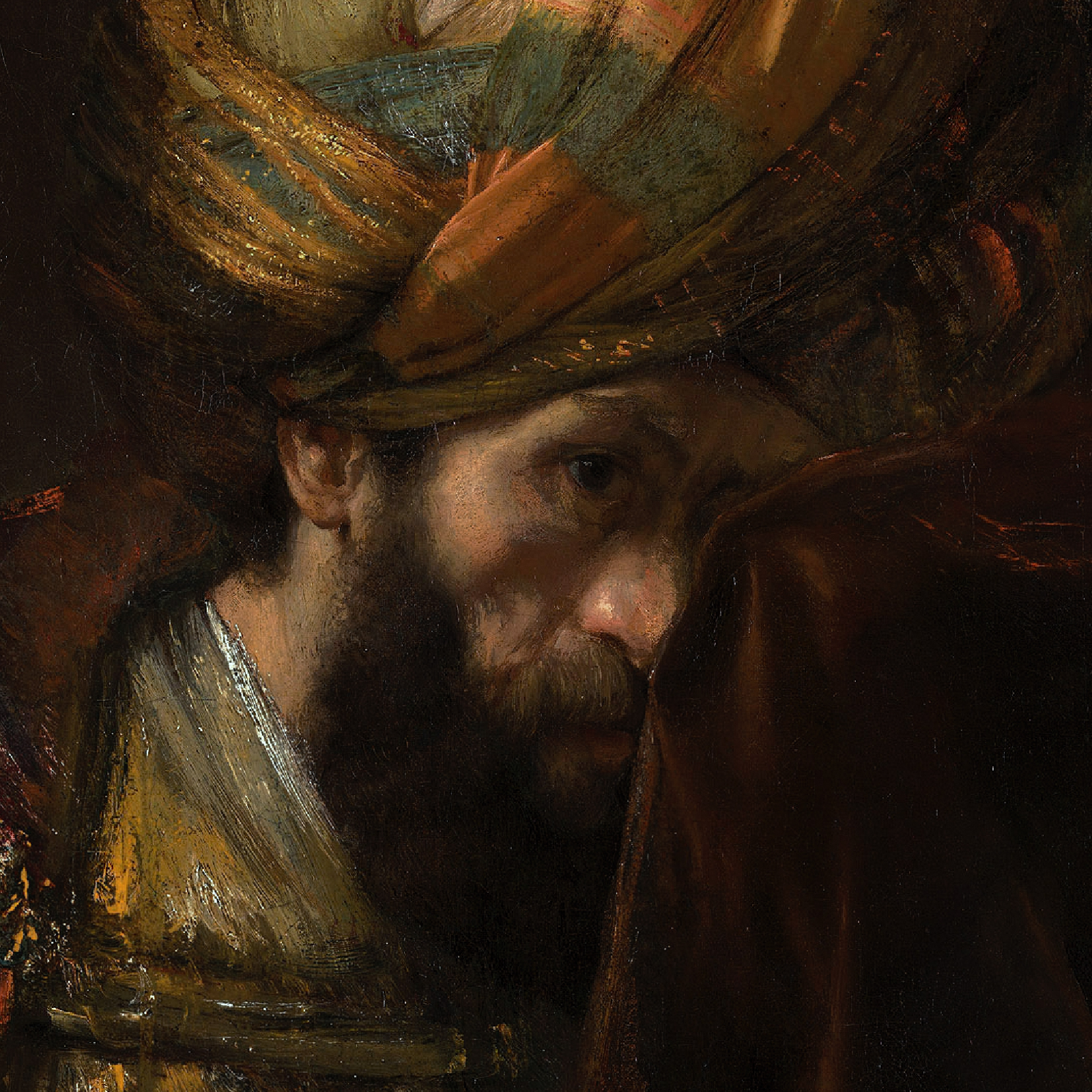
Rembrandt in detail


Rembrandt's contributions to art came in a period of great wealth and cultural achievement that historians call the Dutch Golden Age, when Dutch art (especially Dutch painting), although in many ways antithetical to the Baroque style that dominated Europe, was extremely prolific and innovative and gave rise to important new genres.
Like many artists of the Dutch Golden Age, such as Jan Vermeer of Delft, Rembrandt was also an avid art collector and dealer.
When he was just 18 he bought a studio and shared it with a colleague after training under two influential artists of the time, Jacob Van Swanenburgh and Pieter Lastman.

Read More

Rembrandt in detail


Rembrandt's contributions to art came in a period of great wealth and cultural achievement that historians call the Dutch Golden Age, when Dutch art (especially Dutch painting), although in many ways antithetical to the Baroque style that dominated Europe, was extremely prolific and innovative and gave rise to important new genres.
Like many artists of the Dutch Golden Age, such as Jan Vermeer of Delft, Rembrandt was also an avid art collector and dealer.
When he was just 18 he bought a studio and shared it with a colleague after training under two influential artists of the time, Jacob Van Swanenburgh and Pieter Lastman.

Textual description of firstImageUrl

Mike Savad | American photographer


Mike Savad is an photographer. His style of digital manipulation of images and the addition of color to old images, to achieve that personal cyberpunk effect is fantastic. Mike has achieved a unique style that makes him recognizable all over the world.
"Mike Savad: Photo realistic is what people think of first. There are many themes, flowers, porches, and local Suburban Scenes, some city, some urban.
My style is not really photography and not really a painting.I create images that resemble paintings, a cross between Rockwell, and the paintings of the Renaissance.
I don't like plain photos. I found that over time every photographers work will look the same. Its hard to set yourself apart from everyone else if your work looks like everyone else's".

Read More

Mike Savad | American photographer


Mike Savad is an photographer. His style of digital manipulation of images and the addition of color to old images, to achieve that personal cyberpunk effect is fantastic. Mike has achieved a unique style that makes him recognizable all over the world.
"Mike Savad: Photo realistic is what people think of first. There are many themes, flowers, porches, and local Suburban Scenes, some city, some urban.
My style is not really photography and not really a painting.I create images that resemble paintings, a cross between Rockwell, and the paintings of the Renaissance.
I don't like plain photos. I found that over time every photographers work will look the same. Its hard to set yourself apart from everyone else if your work looks like everyone else's".

Textual description of firstImageUrl

Perugino | The Delivery of the Keys, 1481-1482

The wall paintings of the Sistine Chapel are among the most important examples of the type of painting developed in Florence in the later fifteenth century.
The five artists brought to Rome to execute them came from various different art centres: Botticelli, Ghirlandaio and Rosselli from Florence, Perugino from Umbria, Signorelli from Cortona.
Perugino's contribution was the largest, with the altar wall paintings and three additional pictures.
Recent scholars have concluded that it was he who was in charge of the whole project and who produced the overall design.
It is true that in "the Christ Handing the Keys to St Peter" his portraits appears next to those of the architect and builder.


Read More

Perugino | The Delivery of the Keys, 1481-1482

The wall paintings of the Sistine Chapel are among the most important examples of the type of painting developed in Florence in the later fifteenth century.
The five artists brought to Rome to execute them came from various different art centres: Botticelli, Ghirlandaio and Rosselli from Florence, Perugino from Umbria, Signorelli from Cortona.
Perugino's contribution was the largest, with the altar wall paintings and three additional pictures.
Recent scholars have concluded that it was he who was in charge of the whole project and who produced the overall design.
It is true that in "the Christ Handing the Keys to St Peter" his portraits appears next to those of the architect and builder.


Textual description of firstImageUrl

Cristo Redentore (Rio De Janeiro, 1931)

La statua del Cristo Redentore di Rio de Janeiro è uno dei monumenti più conosciuti al mondo. Il monumento, alto circa 39.6 metri, raffigura un grande Gesù Cristo dalle braccia aperte, a simboleggiare il calore e l'accoglienza del popolo brasiliano verso i visitatori.
Situato sulla montagna del Corcovado, all'interno del Parco Nazionale di Tijuca, sorge proprio sulla cima del monte, a più di 700 metri sul livello del mare, a picco sulla città e sulla baia di Rio de Janeiro, è alta 38 metri, di cui 8 metri fanno parte del basamento, in posizione dominante rispetto alla città.
Dall'alto della sua posizione si apre una splendida veduta sul panorama circostante, che comprende la città di Rio de Janeiro con la sua baia. Da qui sono inoltre visibili il Pan di Zucchero e la Baia di Guanabara e Niteròi, così come le spiagge di Copacabana, di Ipanema e la Laguna Rodrigo de Freitas.


Read More

Cristo Redentore (Rio De Janeiro, 1931)

La statua del Cristo Redentore di Rio de Janeiro è uno dei monumenti più conosciuti al mondo. Il monumento, alto circa 39.6 metri, raffigura un grande Gesù Cristo dalle braccia aperte, a simboleggiare il calore e l'accoglienza del popolo brasiliano verso i visitatori.
Situato sulla montagna del Corcovado, all'interno del Parco Nazionale di Tijuca, sorge proprio sulla cima del monte, a più di 700 metri sul livello del mare, a picco sulla città e sulla baia di Rio de Janeiro, è alta 38 metri, di cui 8 metri fanno parte del basamento, in posizione dominante rispetto alla città.
Dall'alto della sua posizione si apre una splendida veduta sul panorama circostante, che comprende la città di Rio de Janeiro con la sua baia. Da qui sono inoltre visibili il Pan di Zucchero e la Baia di Guanabara e Niteròi, così come le spiagge di Copacabana, di Ipanema e la Laguna Rodrigo de Freitas.


Textual description of firstImageUrl

Genre painting

Genre painting (or petit genre), a form of genre art, depicts aspects of everyday life by portraying ordinary people engaged in common activities.
One common definition of a genre scene is that it shows figures to whom no identity can be attached either individually or collectively - thus distinguishing petit genre from history paintings (also called grand genre) and portraits.
A work would often be considered as a genre work even if it could be shown that the artist had used a known person - a member of his family, say - as a model.
In this case it would depend on whether the work was likely to have been intended by the artist to be perceived as a portrait - sometimes a subjective question.

Vincent van Gogh | The reaper after Millet, 1889

Read More

Genre painting

Genre painting (or petit genre), a form of genre art, depicts aspects of everyday life by portraying ordinary people engaged in common activities.
One common definition of a genre scene is that it shows figures to whom no identity can be attached either individually or collectively - thus distinguishing petit genre from history paintings (also called grand genre) and portraits.
A work would often be considered as a genre work even if it could be shown that the artist had used a known person - a member of his family, say - as a model.
In this case it would depend on whether the work was likely to have been intended by the artist to be perceived as a portrait - sometimes a subjective question.

Vincent van Gogh | The reaper after Millet, 1889

Textual description of firstImageUrl

Henri de Toulouse-Lautrec (French, 1864-1901)


Throughout his career, which spanned fewer than 20 years, Toulouse-Lautrec created 737 canvases, 275 watercolours, 363 prints and posters, 5.084 drawings, some ceramic and stained glass work, and an unknown number of lost works.
His debt to the Impressionists, in particular the more figurative painters Claude Monet 1840-1926 and Edgar Degas 1834-1917, is apparent. His style was also influenced by the classical Japanese woodprints which became popular in art circles in Paris.
In the works of Toulouse-Lautrec can be seen many parallels to Monet's detached barmaid at A Bar at the Folies-Bergère and the behind-the-scenes ballet dancers of Degas.

Read More

Henri de Toulouse-Lautrec (French, 1864-1901)


Throughout his career, which spanned fewer than 20 years, Toulouse-Lautrec created 737 canvases, 275 watercolours, 363 prints and posters, 5.084 drawings, some ceramic and stained glass work, and an unknown number of lost works.
His debt to the Impressionists, in particular the more figurative painters Claude Monet 1840-1926 and Edgar Degas 1834-1917, is apparent. His style was also influenced by the classical Japanese woodprints which became popular in art circles in Paris.
In the works of Toulouse-Lautrec can be seen many parallels to Monet's detached barmaid at A Bar at the Folies-Bergère and the behind-the-scenes ballet dancers of Degas.

Textual description of firstImageUrl

Ignacio Zuloaga y Zabaleta (Spanish, 1870-1945)

Ignacio Zuloaga y Zabaletawas was a Spanish Genre and portrait painter noted for his theatrical paintings of figures from spanish culture and folklore depicting of traditional spanish characters, including peasants, gypsies and bullfighters.
Ignacio Zuloaga y Zabaleta born in Eibar, near the monastery of Loyola. He was the son of metalworker and damascener Plácido Zuloaga and grandson of the organizer and director of the royal armoury in Madrid. In his youth, he drew and worked in his father's workshop. He was educated by the Jesuits in France.
His father wanted him to be an architect, and with this objective in mind, he was sent to Rome, where he immediately followed the strong impulse that led him to painting.


Read More

Ignacio Zuloaga y Zabaleta (Spanish, 1870-1945)

Ignacio Zuloaga y Zabaletawas was a Spanish Genre and portrait painter noted for his theatrical paintings of figures from spanish culture and folklore depicting of traditional spanish characters, including peasants, gypsies and bullfighters.
Ignacio Zuloaga y Zabaleta born in Eibar, near the monastery of Loyola. He was the son of metalworker and damascener Plácido Zuloaga and grandson of the organizer and director of the royal armoury in Madrid. In his youth, he drew and worked in his father's workshop. He was educated by the Jesuits in France.
His father wanted him to be an architect, and with this objective in mind, he was sent to Rome, where he immediately followed the strong impulse that led him to painting.


Textual description of firstImageUrl

Ognian Kouzmanov (Bulgarian, 1979)


Ognian Kouzmanov is a professional artist who lives and works in Pleven, Bulgaria.
He has made many exhibitions in France, Germany, Austria, Slovakia and Czech Republic, Marocco, Serbia and Bulgaria.
Many of his art works are possession of different European private collectors. He paints mainly abstract paintings.

Read More

Ognian Kouzmanov (Bulgarian, 1979)


Ognian Kouzmanov is a professional artist who lives and works in Pleven, Bulgaria.
He has made many exhibitions in France, Germany, Austria, Slovakia and Czech Republic, Marocco, Serbia and Bulgaria.
Many of his art works are possession of different European private collectors. He paints mainly abstract paintings.

Textual description of firstImageUrl

Alexandre Debrus (1843-1905) | Still lifes painter


Alexandre Debrus was an Belgian painter🎨 of still lifes, flowers and portraits; watercolourist.
Alexandre Debrus was born in Spa in 1818 as the son of Jean Nicolas Debrus. He also died there in 1905.
He worked in England for some time and participated at the International Exhibition in Philadelphia in 1876.
His work is well recorded although little is known about his life. He exhibited in France and died in 1905.

Read More

Alexandre Debrus (1843-1905) | Still lifes painter


Alexandre Debrus was an Belgian painter🎨 of still lifes, flowers and portraits; watercolourist.
Alexandre Debrus was born in Spa in 1818 as the son of Jean Nicolas Debrus. He also died there in 1905.
He worked in England for some time and participated at the International Exhibition in Philadelphia in 1876.
His work is well recorded although little is known about his life. He exhibited in France and died in 1905.

Textual description of firstImageUrl

Nicoletta Tomas Caravia (Spanish painter, 1963)


"Painting and I are a community, it has me, I have it. I go hand in hand with painting, because it is the intimate language between me and my soul.
I learn from painting. I express my deepest feelings in such a form of world. From my world to the outside world, both inside and outside are expressed in a mirror way. The inner world is always fighting. The patterns I draw, the light of human existence, the fragility and his greatness, all of which are accompanied by my imagination.

Nicoletta Tomas Caravia was born in Madrid. She is a long-standing international painter and illustrator.
She travels the world with exquisite skills, rich colors, gentle and keen touch.
The purest aspect of human beings also attracts the audience into their own experience.

Read More

Nicoletta Tomas Caravia (Spanish painter, 1963)


"Painting and I are a community, it has me, I have it. I go hand in hand with painting, because it is the intimate language between me and my soul.
I learn from painting. I express my deepest feelings in such a form of world. From my world to the outside world, both inside and outside are expressed in a mirror way. The inner world is always fighting. The patterns I draw, the light of human existence, the fragility and his greatness, all of which are accompanied by my imagination.

Nicoletta Tomas Caravia was born in Madrid. She is a long-standing international painter and illustrator.
She travels the world with exquisite skills, rich colors, gentle and keen touch.
The purest aspect of human beings also attracts the audience into their own experience.

Textual description of firstImageUrl

La donna implorante...| Camille Claudel (1864-1943)

L’Implorante, fa parte del gruppo scultorio L'Âge Mûr - L'età matura, una delle sculture più conosciute della Claudel, sia per lo stile che per la maestosità di cui vi è una versione in gesso ed una in bronzo. Richiestale dallo stesso Auguste Rodin 1840-1917 nel 1895, l'opera fu messa in mostra nella versione gesso nel 1899.
Il gruppo scultoreo fa richiamo al Rodin stesso indeciso fra le sua prima compagna, che poi sposerà e Camille -divenuta sua amante dall'età di 18 anni- che nel gruppo scultoreo è simboleggiata dalla figura che tenta di trattenere il "vecchio" amante che ormai si sta rivolgendo verso la sua futura sposa dimostrando comunque un che di esitante.


Read More

La donna implorante...| Camille Claudel (1864-1943)

L’Implorante, fa parte del gruppo scultorio L'Âge Mûr - L'età matura, una delle sculture più conosciute della Claudel, sia per lo stile che per la maestosità di cui vi è una versione in gesso ed una in bronzo. Richiestale dallo stesso Auguste Rodin 1840-1917 nel 1895, l'opera fu messa in mostra nella versione gesso nel 1899.
Il gruppo scultoreo fa richiamo al Rodin stesso indeciso fra le sua prima compagna, che poi sposerà e Camille -divenuta sua amante dall'età di 18 anni- che nel gruppo scultoreo è simboleggiata dalla figura che tenta di trattenere il "vecchio" amante che ormai si sta rivolgendo verso la sua futura sposa dimostrando comunque un che di esitante.


Textual description of firstImageUrl

Jacques Prévert / Jeremy Mann | Bussano...


Chi è
Nessuno
E' solo il mio cuore che batte
Che batte troppo forte
Per causa tua.
Ma di fuori
La piccola mano bronzea sulla porta di legno
Non si sposta
Non si muove
Non muove neanche la punta del dito ...

Read More

Jacques Prévert / Jeremy Mann | Bussano...


Chi è
Nessuno
E' solo il mio cuore che batte
Che batte troppo forte
Per causa tua.
Ma di fuori
La piccola mano bronzea sulla porta di legno
Non si sposta
Non si muove
Non muove neanche la punta del dito ...

Textual description of firstImageUrl

Ancient Buddhism and Buddhist Art

Buddha, Probably Amitabha Amituofo | Early 7th century | China | Metropolitan Museum of Art

The history of Buddhism spans from the 6th century BCE to the present. Buddhism arose in the eastern part of Ancient India, in and around the ancient Kingdom of Magadha (now in Bihar, India), and is based on the teachings of Siddhārtha Gautama.
The religion evolved as it spread from the northeastern region of the Indian subcontinent through Central, East, and Southeast Asia. At one time or another, it influenced most of the Asian continent.
The history of Buddhism is also characterized by the development of numerous movements, schisms, and schools, among them the Theravāda, Mahāyāna and Vajrayāna traditions, with contrasting periods of expansion and retreat.

Read More

Ancient Buddhism and Buddhist Art

Buddha, Probably Amitabha Amituofo | Early 7th century | China | Metropolitan Museum of Art

The history of Buddhism spans from the 6th century BCE to the present. Buddhism arose in the eastern part of Ancient India, in and around the ancient Kingdom of Magadha (now in Bihar, India), and is based on the teachings of Siddhārtha Gautama.
The religion evolved as it spread from the northeastern region of the Indian subcontinent through Central, East, and Southeast Asia. At one time or another, it influenced most of the Asian continent.
The history of Buddhism is also characterized by the development of numerous movements, schisms, and schools, among them the Theravāda, Mahāyāna and Vajrayāna traditions, with contrasting periods of expansion and retreat.

Textual description of firstImageUrl

Josephine Wall (British, 1947)


"The art of painting is more than a career to me", she says, "it is an all consuming obsession and a love of colour and form. In fact, if I am away from my easel for too long I become restless and anxious to paint again" - Josephine Wall.

Wall's paintings are mainly influenced and inspired by Arthur Rackham, with lesser influences from surrealist artists such as Magritte and Dalí, and the romanticism of the pre-Raphaelites.
A number of her works were exhibited in Teheran and Tokyo during 1974 and her first solo exhibition took place the following year in Swindon. Josephine and her paintings were the subject of a special feature on Southern Television in 1990.
Following a visit to the Spring Fair in Birmingham in 1993 she signed contracts with firms in Britain and Switzerland to publish her work as prints, posters and cards for worldwide distribution.
Her originals and limited edition prints by are often sold through Courtenay's Fine Art and Courtyard of Romance.

Read More

Josephine Wall (British, 1947)


"The art of painting is more than a career to me", she says, "it is an all consuming obsession and a love of colour and form. In fact, if I am away from my easel for too long I become restless and anxious to paint again" - Josephine Wall.

Wall's paintings are mainly influenced and inspired by Arthur Rackham, with lesser influences from surrealist artists such as Magritte and Dalí, and the romanticism of the pre-Raphaelites.
A number of her works were exhibited in Teheran and Tokyo during 1974 and her first solo exhibition took place the following year in Swindon. Josephine and her paintings were the subject of a special feature on Southern Television in 1990.
Following a visit to the Spring Fair in Birmingham in 1993 she signed contracts with firms in Britain and Switzerland to publish her work as prints, posters and cards for worldwide distribution.
Her originals and limited edition prints by are often sold through Courtenay's Fine Art and Courtyard of Romance.