Home » Tutti i post
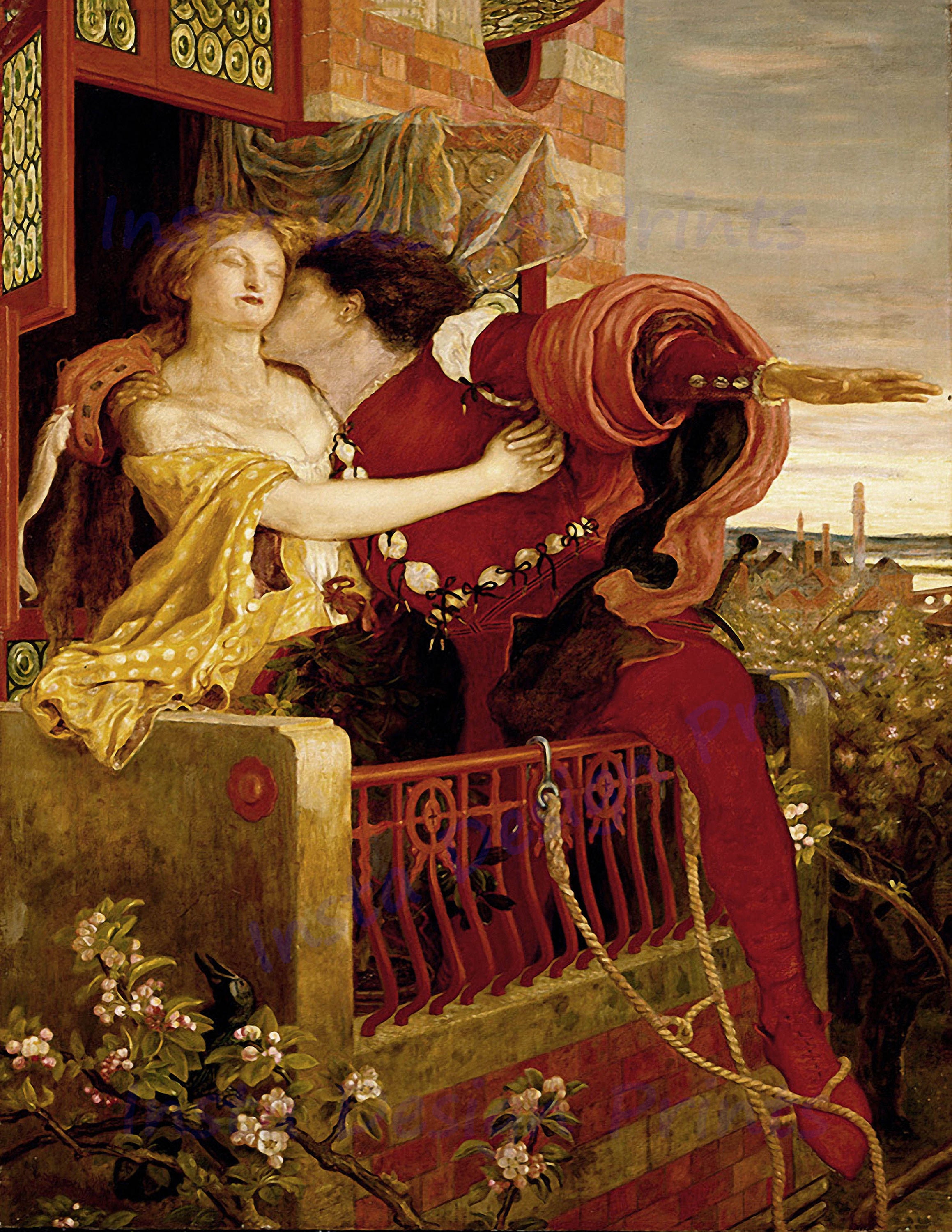
Ford Madox Brown | Pittore Preraffaellita
Ford Madox Brown (1821-1893) è stato un pittore Inglese. Sebbene non facesse ufficialmente parte della confraternita dei Preraffaeliti, Brown fu colui che, facendo conoscere l'arte dei puristi e dei nazareni, influì in modo significativo nello stile del gruppo.
Ford Madox Brown nacque a Calais il 16 aprile 1821 da Ford Brown, commissario di bordo, e da Caroline Madox, di un'antica famiglia del Kent. Sposò prima Elizabeth Bromley, cugina per parte di madre, da cui ebbe Lucy nel 1843.
Dopo la morte della prima moglie per tubercolosi avvenuta nel 1846, dalla sua modella Emma Hill ebbe Catherine che diventerà artista come la sorellastra e come prometteva di diventare anche l'altro fratello Oliver morto prematuramente. Studiò in diverse città europee quali Gand, Bruges ed all'Accademia di Anversa.
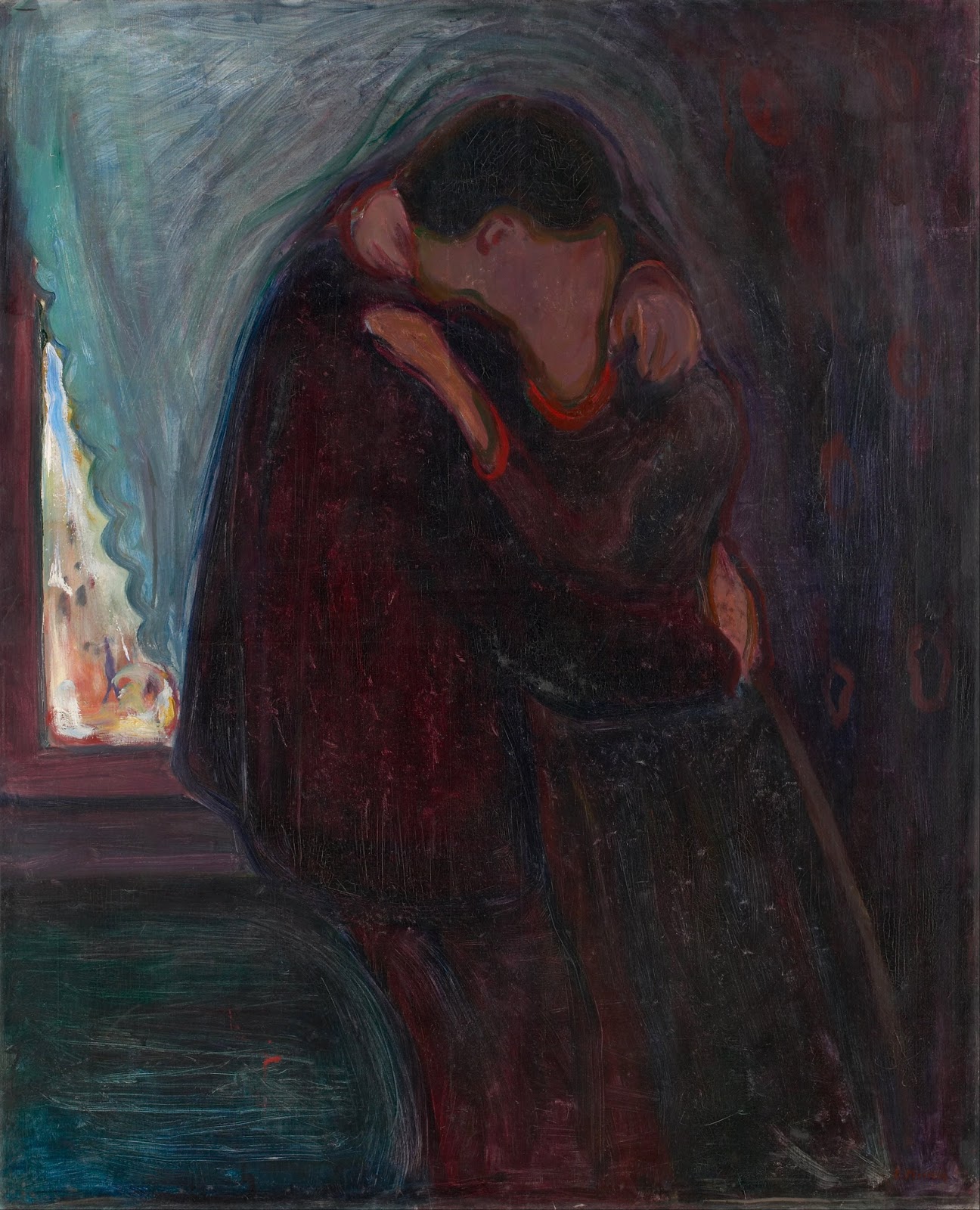
Edvard Munch | Il bacio, 1897
Il bacio è un dipinto ad olio su tela (alto 99 e largo 81 centimetri) di Edvard Munch, realizzato nel 1897 ed è conservato nel Museo Munch di Oslo.
Raffigura una coppia circondata dall'oscurità, in una stanza rischiarata solo da un raggio di luce proveniente da una finestra parzialmente ricoperta da una tenda.
I due si abbracciano strettamente, fino a perdere la propria identità, allorché si miscelano in un'unica forma priva di tratti distintivi.
La critica d'arte Roberta Smith sottolinea come Munch abbia favorito «pennellate lunghe [...] che più che dipinte sembrano macchie».
Nel 1892, cinque anni prima della stesura de "Il bacio", Munch eseguì un'altra tela sul medesimo soggetto: si tratta de Il bacio con la finestra.
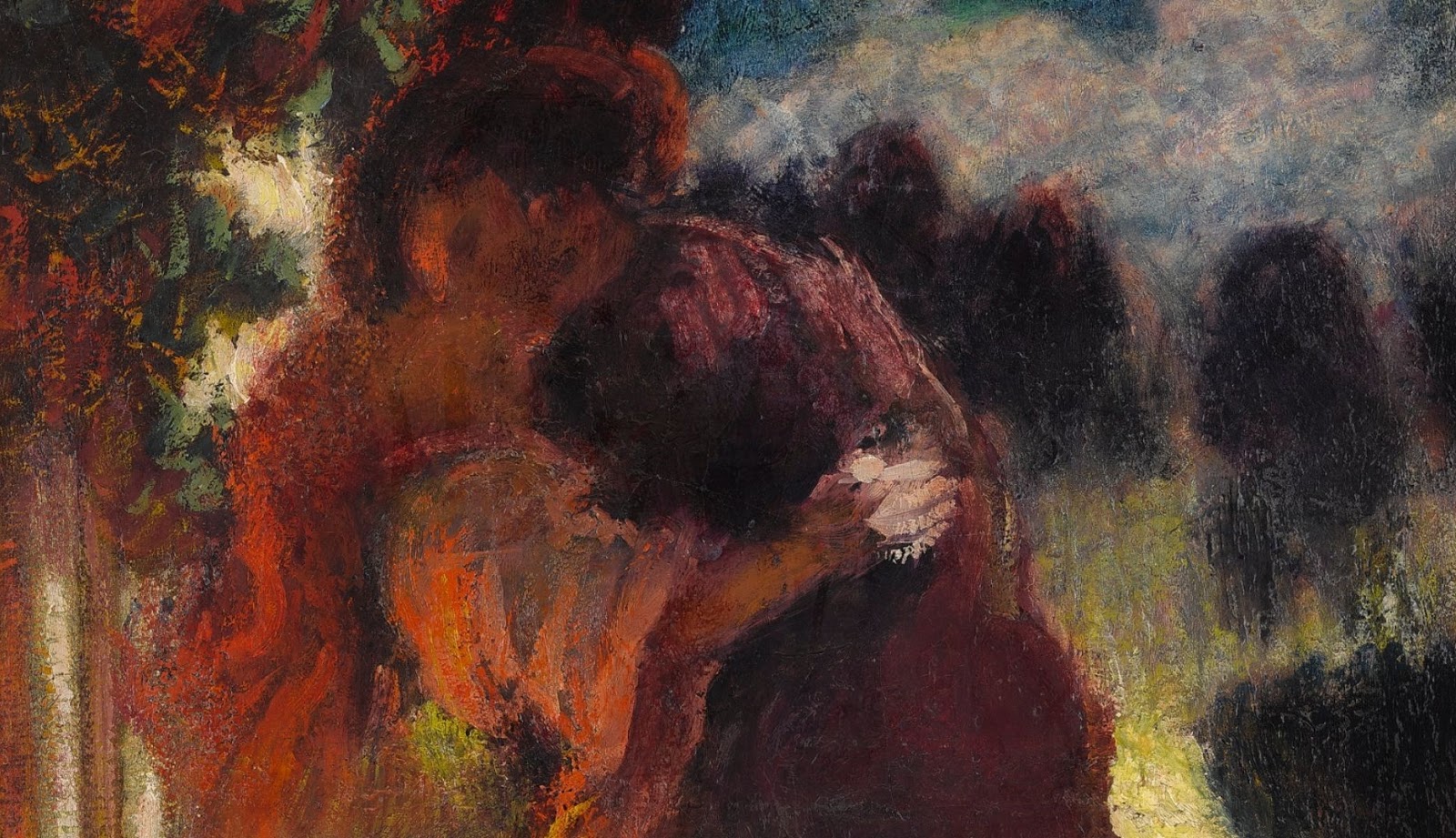
Roderic O'Conor | Romeo and Juliet, 1898-1900
This extraordinary painting, Roderic O'Conor's answer to "The Kiss"🎨 by Edvard Munch, belongs to a group of imaginative compositions the Irish artist🎨 worked on during the closing years of the nineteenth century.
Living in isolation in the small Breton town of Rochefort-en-terre, whilst keeping in touch by letter with Gauguin🎨, de Chamaillard and Seguin, O'Conor composed from memory to create works of Symbolist🎨 intent.
Marie Duhem | Post-Impressionist painter
Marie Duhem (1871-1918) born Marie Amélie Hortense Sergeant was a French painter.
Her parents operated a lace factory, so she became familiar with the work of designers and models from an early age.
She began her art studies with Adrien Demont, husband of the painter Virginie Demont-Breton.
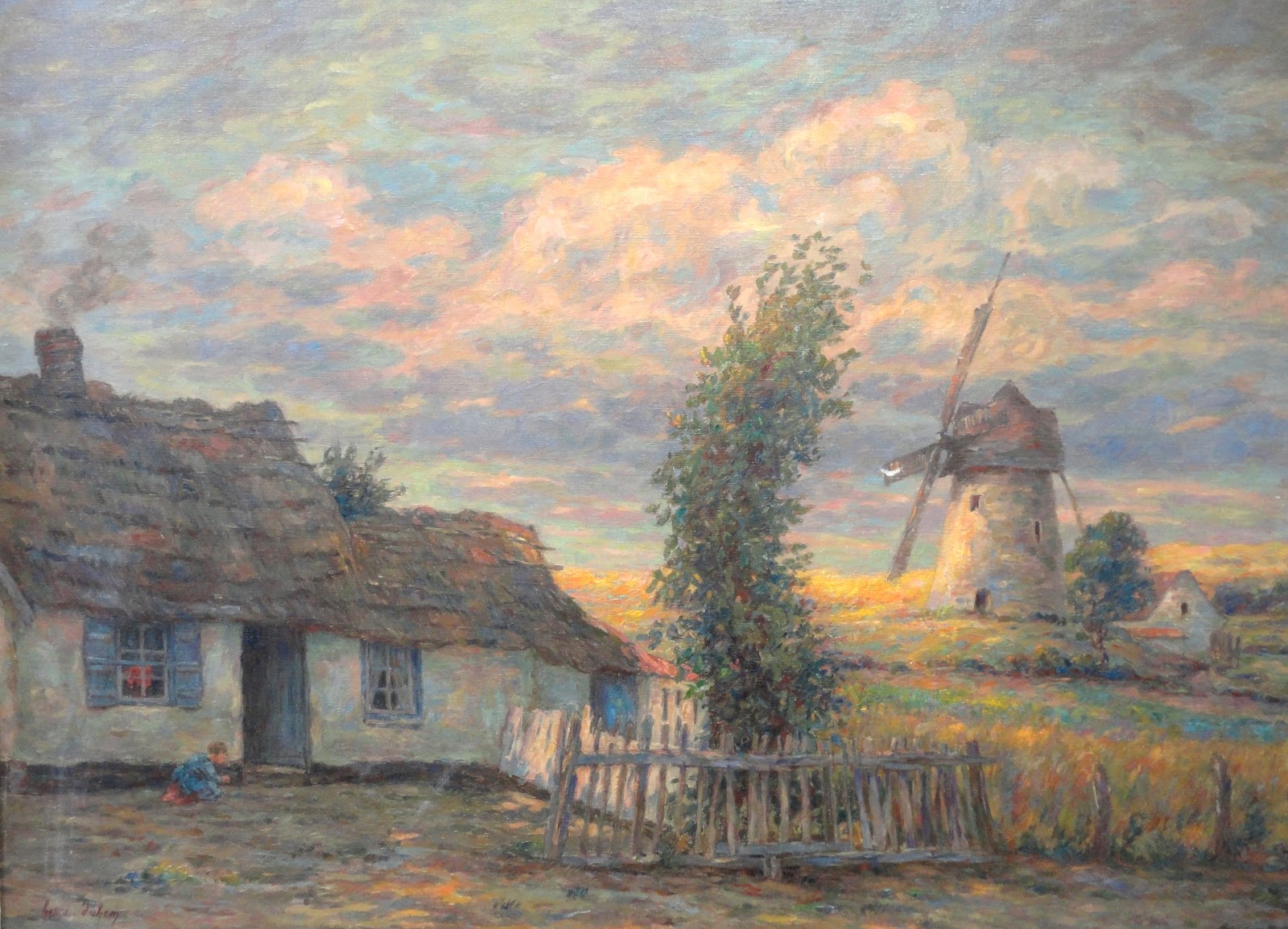
Henri Duhem (1860-1941) | Impressionist painter
Henri Aimé Duhem as a French🎨 Impressionist painter.
He was descended from an old Flemish family and originally practiced as a lawyer.
In 1887, his passion for drawing and watercolors finally led him to go to Paris and enroll in the drawing classes of Henri Harpignies🎨.
Charles Guilloux (1866-1946) | Symbolist painter
Charles-Victor Guilloux was a French🎨 symbolist artist.
An employee of the Bibliothèque Nationale in Paris, Guilloux was a self-taught artist who critics like Albert Aurier, Félix Fénéon and Rémy de Gourmont liken to the time of the Symbolist movement🎨.
Louis Gaidan (1847-1925) Neo-Impressionist painter
Louis Gaidan was a French painter🎨 associated with the Neo-Impressionism movement🎨.
He was born in Nîmes to a wealthy family who owned a bank, the Banque Gaidan.
He studied in Paris with the Academic painter Jean Jalabert and later in Nîmes with the landscape painter Paulin Bertrand.
Jalabert taught him the fine draftsmanship of the Academic tradition and from Paulin Bertrand he was exposed to the painting of landscapes en plein air.
Pierre-Auguste Renoir at the Christie's
Christie’s is a name and place that speaks of extraordinary art, unparalleled service, expertise and global reach.
Founded in 1766 by James Christie, Christie's has since conducted the greatest and most celebrated auctions through the centuries providing a popular showcase for the unique and the beautiful.
Iscriviti a:
Post (Atom)