Visualizzazione post con etichetta 16th Century Art. Mostra tutti i post
Textual description of firstImageUrl

Caravaggio | The Lute Player / Suonatore di Liuto, 1595-1596

The Lute Player is an early work by Caravaggio, who sought above all to convey the reality and solidity of the surrounding world.
We can already see the elements of the artist's style which were to have such a widespread influence on other artists.
The figure of a young boy dressed in a white shirt stands out clearly against the dark background.
The sharp sidelighting and the falling shadows give the objects an almost tangible volume and weight.
Caravaggio was interested in the uniqueness of the surrounding world, and there are markedly individual features not only in the youth's face but also in the objects which make up the still life: the damaged pear, the crack in the lute, the crumpled pages of the music.
The melody written on those pages is that of a then fashionable song by Jacques Arcadelt, "You know that I love you".

Caravaggio | The Lute Player | The Hermitage version, 1595-1596

Textual description of firstImageUrl

Caravaggio | Saint John the Baptist in the wilderness, 1604

"Saint John the Baptist in the Wilderness" by Caravaggio, is a Baroque period painting on display at The Nelson-Atkins Museum of Art in Kansas City, Missouri.
This masterpiece, one of the Museum’s greatest treasures, is one of only a few original works by Caravaggio in American collections.
Although he never took in pupils, Caravaggio’s enormous influence on other artists played a vital role in the development of the Italian Baroque.
In this Saint John the Baptist, Caravaggio has traded idealism for what oftentimes became in his own time a controversial realism.


Textual description of firstImageUrl

Albrecht Altdorfer | The Battle of Alexander at Issus, 1529

The Battle of Alexander at Issus is a 1529 oil painting by the German artist Albrecht Altdorfer (c. 1480-1538), a pioneer of landscape art and a founding member of the Danube school.
It portrays the 333 BC Battle of Issus, in which Alexander the Great secured a decisive victory over Darius III of Persia and gained crucial leverage in his campaign against the Persian Empire.
The painting is widely regarded as Altdorfer's masterpiece, and is one of the most famous examples of the type of Renaissance landscape painting known as the world landscape, which here reaches an unprecedented grandeur.


Textual description of firstImageUrl

Valentin De Boulogne | Allegoria dell'Italia, 1628-29

Valentin de Boulogne | Allegory of Italy, 1628-29 | Institutum Romanum Finlandiae, Rome

L'Allegoria d'Italia (olio su tela, 333 x 245 cm) fu dipinta per il nipote papale, il cardinale Francesco Barberini.
Come in un tableau vivant, personaggi riconoscibili hanno assunto ruoli emblematici: una giovane donna è vestita come l'Italia (indossa una corona merlata, regge uno scudo e sta in piedi su una cornucopia); due uomini dal petto villoso interpretano le parti di divinità fluviali (l'Arno, con un leone, ed il Tevere, con i gemelli Romolo e Remo e la lupa che li allattò).
In quest'opera, Valentin spinse la pratica della pittura da un modello in posa alle sue estreme conseguenze, creando un capolavoro unico, radicale quanto qualsiasi opera di Caravaggio.

Textual description of firstImageUrl

Guido Reni | The Head of a Woman Looking Up (Judith), 1625-26

Striking for its coloristic richness -a pictorial quality imparted by the combination of red and black chalk- this head of a young woman is a preparatory study for Reni's painting Judith and Holofernes, a celebrated and much replicated composition.
The present study was most probably derived from life, to judge from the bold immediacy of the contours and the quick zig-zagging of the parallel hatching of the shading.

Guido Reni | The Head of a Woman Looking Up (Judith), 1625-26 | Metropolitan Museum of Art

Textual description of firstImageUrl

Leonardo da Vinci e Michelangelo

Il rapporto tra i due geni del Rinascimento, Leonardo da Vinci (1452-1519) e Michelangelo Buonarroti (1475-1564), fu difficile, spesso teso, a causa della differenza generazionale (Michelangelo era di 23 anni più giovane di Leonardo), ma soprattutto, per via dei caratteri diversi e degli ideali artistici inconciliabilmente lontani: il primo fu riflessivo, poliedrico e interessato al mondo naturale; il secondo più impulsivo, notoriamente riottoso ed idealista.
Non vi sono prove dirette della loro inimicizia, ma svariati indizi e testimonianze indirette.


Textual description of firstImageUrl

Michelangelo Buonarroti | Sculpture

Michelangelo's (1475-1564) earliest sculpture was made in the Medici garden near the church of San Lorenzo; his Bacchus and Sleeping Cupid both show the results of careful observation of the classical sculptures located in the garden.
His later Battle of the Lapiths and Centaurs and Madonna of the Stairs reflect his growing interest in his contemporaries.


Textual description of firstImageUrl

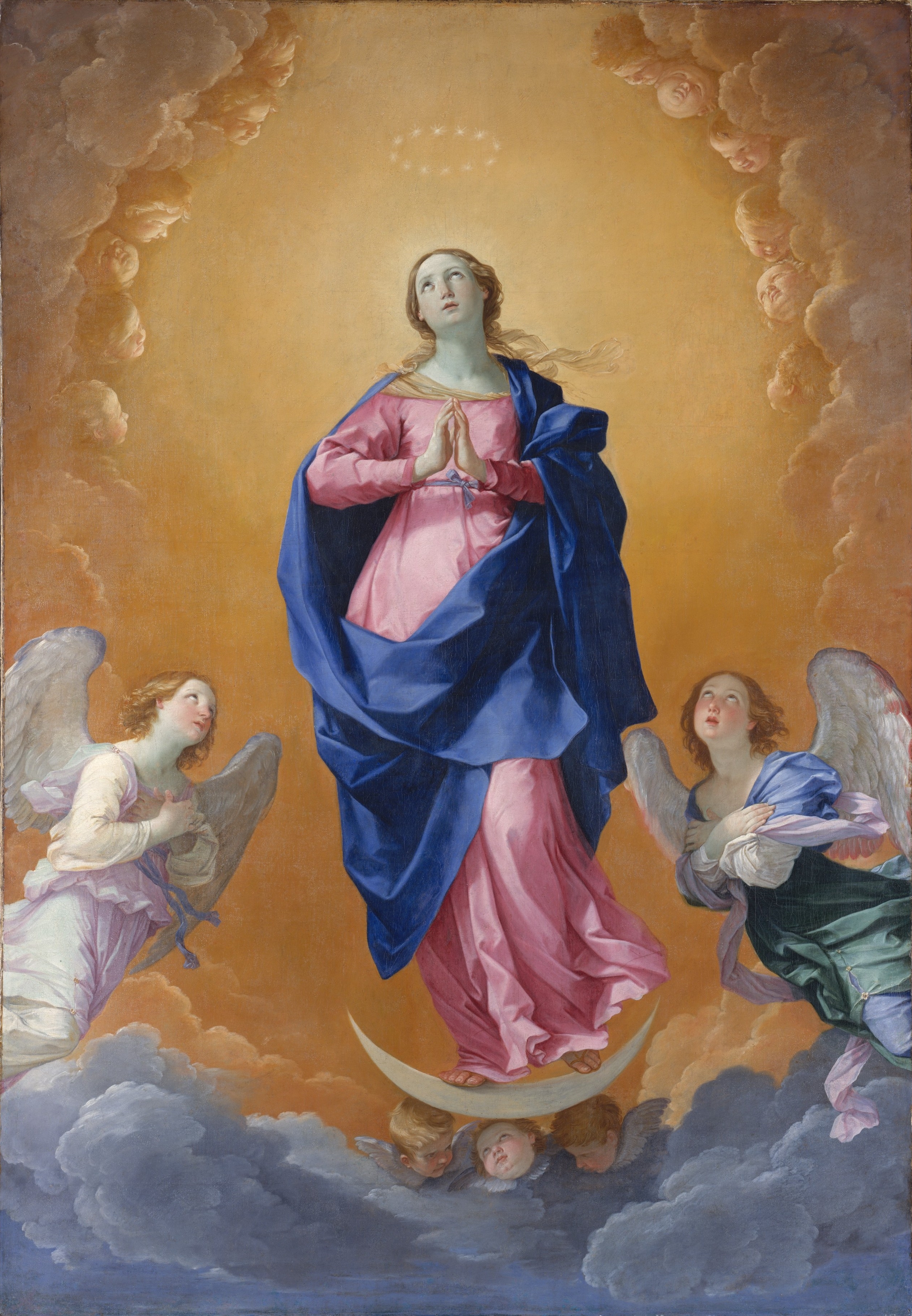
Guido Reni | The Immaculate Conception, 1627

Guido Reni (Bologna, 1575-1642), the most celebrated painter of seventeenth-century Italy, was particularly famous for the elegance of his compositions and the beauty and grace of his female heads, earning him the epithet “Divine".
This altarpiece, with its otherworldly space shaped by clouds and putti in a high-keyed palette, was commissioned in about 1627 by the Spanish ambassador in Rome for the Infanta of Spain.

Guido Reni | The Immaculate Conception, 1627 | Metropolitan Museum of Art

Textual description of firstImageUrl

Francesco Bacchiacca | Portrait of a young lady holding a cat, 1525-30


A Florentine painter and draughtsman, Francesco d'Ubertino Verdi, called Bacchiacca (1494-1557) is chiefly recognized as an artist who helped evolve the style of Mannerism.
He is said to have studied with Umbrian painter, Pietro Perugino (1446-1524) and also collaborated with other artists of the time such as Franciabigio (1482-1525) and Pontormo (1494-1557).

Textual description of firstImageUrl

Sigismondo Coccapani | Baroque painter

Sigismondo Coccapani (1585-1643) was an Italian painter of the Baroque period.
Born in Florence, he studied under Ludovico Cigoli in Rome, before returning to his native city.
He at first studied literature and mathematics, but abandoned them for painting, becoming a pupil of Ludovico Cigoli in Rome where he assisted him on his work at Santa Maria Maggiore in 1610-13.
Using his scientific background he showed Cigoli, who was making a record of solar activity for his friend Galileo, how to observe and record sunspots through a method of projection.


Textual description of firstImageUrl

Wisława Szymborska | Le donne di Rubens

Ercolesse, fauna femminile,
nude come il fragore di botti.
Fanno il nido in letti calpestati,
nel sonno la bocca si apre al chicchirichì.
Le pupille rovesciate all’indietro
Penetrano dentro le ghiandole da cui i lieviti stillano nel sangue.

Peter Paul Rubens | Frans Snyders - Ceres with two Nymphs, 1624 | Museo Nacional del Prado

Textual description of firstImageUrl

Peter Paul Rubens | Mars and Rhea Silvia, 1617


Mars and Rhea Silvia is a 1617 painting by Peter Paul Rubens, now in the Liechtenstein Museum in Vienna.
It shows Mars's rape of Rhea Silvia, which resulted in the birth of Romulus and Remus, founders of Rome.

Textual description of firstImageUrl

Amore non è amore se muta.. | Shakespeare, Sonetto 116

Shakespeare | Let me not to the marriage of true minds | Sonnet 116

Let me not to the marriage of true minds
Admit impediments. Love is not love
Which alters when it alteration finds,

Or bends with the remover to remove:
O no! it is an ever-fixed mark
That looks on tempests and is never shaken;

Alessandro Puttinati | Paolo e Virginia, 1844

Textual description of firstImageUrl

Cenacolo di Leonardo: "Uno di voi mi tradirà" / "One of you will betray me"!

The Last Supper, painted between 1494 and the beginning of 1498, is considered perhaps the most important mural painting in the world, "a beautiful and marvelous thing", as Giorgio Vasari wrote in his Lives of the Most Excellent Painters, Sculptors and Architects, in which he speaks of Leonardo and describes the Last Supper.
Painter, architect, sculptor, engineer, inventor, mathematician, anatomist and writer, Leonardo da Vinci embodied the ideal of the many-sided man dreamed of by the Italian Renaissance.

Leonardo da Vinci | The Last Supper, 1494-1498 (detail) | Church and Dominican Convent of Santa Maria delle Grazie

Textual description of firstImageUrl

Marco d'Oggiono | Elevazione della Maddalena, 1522-1524

Elevazione della Maddalena was created in 1522-1524 by Marco d'Oggiono (1470-1540), Italian Renaissance painter and a chief pupil of Leonardo da Vinci.
The painting, measuring cm 146x103, is part of the collection of the Pinacoteca Brera, Milano.
The artwork, on a stylistic level is noted for, other than Leonardo’s influences, also the peaceful sweetness of Raphael and the sensuality of Correggio, represents Saint Mary Magdalene elevated to heaven by a multitude of angels.

Marco d'Oggiono | Elevazione della Maddalena, 1522-24 | Pinacoteca Brera, Milano

Textual description of firstImageUrl

7 masterpieces at the Thyssen-Bornemisza Museum

Frederick Carl Frieseke | The House in Giverny, 1912

When Frieseke first settled at Giverny in 1906, he stayed at Le Hameau (the hamlet) on the rue du Pressoir.
The two-story cottage surrounded by high walls on three sides enclosing a garden was next door to the home of Claude Monet and had previously been occupied by the American artist Lilla Cabot Perry.

The house shown in The House in Giverny, however, is most likely the Whitman house, the second of Frieseke's three Giverny residences.
Its green shutters and the distinctive open lattice-work of green trellises laden with flowers appear in a number of Frieseke's paintings, including Lilies, Tea Time in a Giverny Garden (both Daniel J. Terra Collection) and Hollyhocks, c. 1912-1913 (Carmen Thyssen-Bornemisza Collection).

The intimacy of Frieseke's small painting and his interest in decorative pattern links the artist more closely with the Nabi painters Vuillard and Bonnard than to his neighbour Monet or with Renoir, the French Impressionist he most admired.
The artist stated his creed published in a 1914 interview: "My one idea is to reproduce flowers in sunlight.
I do not suggest detail by form, as I have to keep it as pure as possible or the effect of brilliancy will be lost.
Of course, there is a limit to the strength of pigments, and one can but relatively give the impression of nature. I may see a glare of white light at noon, but I cannot render it literally [...]
I usually make my first notes and impressions with dashes of tempera, then I paint over this with small strokes in oil to produce the effect of vibration, completing as I go". | Source: © Thyssen-Bornemisza Museum

Frederick Carl Frieseke (American, 1874-1939) | The House in Giverny, 1912 | Museo Nacional Thyssen-Bornemisza, Madrid

Textual description of firstImageUrl

The Prado Mona Lisa, 1507-1516

This version of the Mona Lisa (Louvre) was painted by one of Leonardo’s pupils.
The fact that each pentimento, or change, in Leonardo’s original (to the bust, outline of the veil and position of the fingers) is repeated here suggests that the two works were created simultaneously.
There are also differences with respect to the original, in the unfinished landscape and on the face.
Overall, the panel seems to reflect an intermediate stage in the creation of the Louvre painting.

Prado Mona Lisa, 1503-1516 | Museo Nacional del Prado

Textual description of firstImageUrl

Christopher Marlowe | Vieni a vivere con me e sii il mio amore / The passionate shepherd to his Love, 1599

"The Passionate Shepherd to His Love" (1599), by Christopher Marlowe (English playwright, poet, and translator of the Elizabethan era, 1564-1593), is a pastoral poem from the English Renaissance (1485–1603).
Marlowe composed the poem in iambic tetrameter (four feet of one unstressed syllable followed by one stressed syllable) in six stanzas, and each stanza is composed of two rhyming couplets; thus the first line of the poem reads: "Come live with me and be my love".

Come live with me, and be my love;
And we will all the pleasures prove
That hills and valleys, dales and fields,
Woods, or steepy mountains yields.

Walter Crane | The Passionate Shepherd to his Love illustration

Textual description of firstImageUrl

Ludovico Carracci | The penitent Saint Peter, 1613


Although mentioned by Ludovico's earliest biographer Malvasia as early as 1678, all trace of this monumental and imposing image of repentance was lost until its rediscovery only thirty years ago.
Malvasia recorded how Ludovico had given to Count Camillo Bolognetti, a nobleman and occasional amateur painter in the Carracci workshop, 'la figura intera di quel S. Pietro piangente, così risentito e terribile'.
In a handwritten note included in the 1841 edition of his Felsina pittrice the picture is referred to as 'San Pietro piangente l'aversi negato discepolo di Cristo, figura sedente, meno del naturale'.

Textual description of firstImageUrl

Peter Paul Rubens | Christ Risen, 1616

"Christ Risen", "The Easter Tomb" or "The Triumph of Christ over Death and Sin" is a painting by Peter Paul Rubens (1577-1640), executed c. 1616.
It entered the collection of Ferdinando de' Medici, Grand Prince of Tuscany between 1713 and 1723 and is now in the Palatine Gallery of the Palazzo Pitti in Florence.