Textual description of firstImageUrl

Auguste Leroux | Figurative / Genre painter


Jules Marie Auguste Leroux (1871-1954) was a French painter and illustrator. His younger brother Georges Paul Leroux (1877-1957) was also a brilliant artist who won the Prix de Rome in painting in 1906 and was a member of the Académie des Beaux-arts.
Jules Marie Auguste Leroux was born in the 3rd arrondissement of Paris on 14 April 1871, during the Commune.

Read More

Auguste Leroux | Figurative / Genre painter


Jules Marie Auguste Leroux (1871-1954) was a French painter and illustrator. His younger brother Georges Paul Leroux (1877-1957) was also a brilliant artist who won the Prix de Rome in painting in 1906 and was a member of the Académie des Beaux-arts.
Jules Marie Auguste Leroux was born in the 3rd arrondissement of Paris on 14 April 1871, during the Commune.

Textual description of firstImageUrl

Angele Dubos (1844-1916)


Angèle Dubos born Laure Constance Angèle Dubos was a student of the great painter Charles Chaplin (1825-1891)🎨, which opens a course devoted solely to women artists🎨, among which we can mention Mary Cassatt🎨 and Louise Abbéma.
Chaplin encourages its students to participate. She is the first winner🎨 of the contest that gets the gold medal.
Read More

Angele Dubos (1844-1916)


Angèle Dubos born Laure Constance Angèle Dubos was a student of the great painter Charles Chaplin (1825-1891)🎨, which opens a course devoted solely to women artists🎨, among which we can mention Mary Cassatt🎨 and Louise Abbéma.
Chaplin encourages its students to participate. She is the first winner🎨 of the contest that gets the gold medal.

Textual description of firstImageUrl

18th century Inventions

Piano by Bartolomeo Cristofori, 1726

The inventions of the 18th century made the modern world that we live in possible.
The 18th century was a time of innovation. The industrial revolution would not be possible if it were not for the men who created the inventions to make life easier and more productive.
Some inventions were improvements on older machinery.

1700s

1701 ‣ Jethro Tull invents the seed drill.
1709 ‣ Bartolomeo Cristofori crafts the first piano.
1709 ‣ Daniel Gabriel Fahrenheit invents the alcohol thermometer.

Read More

18th century Inventions

Piano by Bartolomeo Cristofori, 1726

The inventions of the 18th century made the modern world that we live in possible.
The 18th century was a time of innovation. The industrial revolution would not be possible if it were not for the men who created the inventions to make life easier and more productive.
Some inventions were improvements on older machinery.

1700s

1701 ‣ Jethro Tull invents the seed drill.
1709 ‣ Bartolomeo Cristofori crafts the first piano.
1709 ‣ Daniel Gabriel Fahrenheit invents the alcohol thermometer.

Textual description of firstImageUrl

Mikki Senkarik, 1954 | Romantic Impressionist painter


Mikki Senkarik illustrated 47 major medical textbooks and in her nine years as a medical illustrator was honored 5 times with the Award🎨 of Excellence by her peers.
Before switching to oils she was the most sought after medical artist during her years of practice.
She says, "There is nothing accidental about quality".

Senkarik had dreamed of being an artist as long as she can remember. Her mother recognized the spark of genius before Mikki entered kindergarten.

Read More

Mikki Senkarik, 1954 | Romantic Impressionist painter


Mikki Senkarik illustrated 47 major medical textbooks and in her nine years as a medical illustrator was honored 5 times with the Award🎨 of Excellence by her peers.
Before switching to oils she was the most sought after medical artist during her years of practice.
She says, "There is nothing accidental about quality".

Senkarik had dreamed of being an artist as long as she can remember. Her mother recognized the spark of genius before Mikki entered kindergarten.

Textual description of firstImageUrl

Paul Signac: "Il divisionismo è un complesso sistema di armonia.."

"Il divisionismo è un complesso sistema di armonia, un'estetica piuttosto che una tecnica.
Il punto è solo un mezzo.
Dividere è ricercare la potenza e l'armonia del colore, attraverso la rappresentazione della luce colorata mediante elementi puri, ed attraverso l'utilizzo della miscela ottica di questi elementi puri, separati e proporzionati secondo le leggi essenziali del contrasto e della graduazione".


Read More

Paul Signac: "Il divisionismo è un complesso sistema di armonia.."

"Il divisionismo è un complesso sistema di armonia, un'estetica piuttosto che una tecnica.
Il punto è solo un mezzo.
Dividere è ricercare la potenza e l'armonia del colore, attraverso la rappresentazione della luce colorata mediante elementi puri, ed attraverso l'utilizzo della miscela ottica di questi elementi puri, separati e proporzionati secondo le leggi essenziali del contrasto e della graduazione".


Textual description of firstImageUrl

Salvatore Quasimodo | Che breve notte! / What a short night!

Che breve notte, amore. Un raggio
di luce è già sulla tua fronte,
nei tuoi capelli di madonna bizantina:
e dai carrozzoni lungo il fiume
assale antiche radici
la voce dei giovani nomadi, funamboli
di gramo pane e di parole murate nello sdegno.

Charles-Amable Lenoir (1860-1926) | Reverie, 1893 (detail)

Read More

Salvatore Quasimodo | Che breve notte! / What a short night!

Che breve notte, amore. Un raggio
di luce è già sulla tua fronte,
nei tuoi capelli di madonna bizantina:
e dai carrozzoni lungo il fiume
assale antiche radici
la voce dei giovani nomadi, funamboli
di gramo pane e di parole murate nello sdegno.

Charles-Amable Lenoir (1860-1926) | Reverie, 1893 (detail)

Textual description of firstImageUrl

19th century Inventions

Gaines Ruger Donoho (American painter, 1857-1916) | The Mount, 1880

The 19th century🎨 saw the birth of science as a profession; the term scientist was coined in 1833 by William Whewell, which soon replaced the older term of (natural) philosopher.

mong the most influential ideas of the 19th century were those of Charles Darwin (alongside the independent researches of Alfred Russel Wallace), who in 1859 published the book "The Origin of Species", which introduced the idea of evolution by natural selection.
Another important landmark in medicine and biology were the successful efforts to prove the germ theory of disease.

Read More

19th century Inventions

Gaines Ruger Donoho (American painter, 1857-1916) | The Mount, 1880

The 19th century🎨 saw the birth of science as a profession; the term scientist was coined in 1833 by William Whewell, which soon replaced the older term of (natural) philosopher.

mong the most influential ideas of the 19th century were those of Charles Darwin (alongside the independent researches of Alfred Russel Wallace), who in 1859 published the book "The Origin of Species", which introduced the idea of evolution by natural selection.
Another important landmark in medicine and biology were the successful efforts to prove the germ theory of disease.

Textual description of firstImageUrl

Franz Leo Ruben (1842-1920) | Genre painter


Franz Leo Ruben was an Austrian painter🎨 who was born in Prague, Czech Republic.
Painter of history, genre scenes, landscapes, he obtained numerous awards including a gold medal🎨 in Vienna in 1873 and one in Munich in 1883.

He has painted numerous views of Venice. His works can be found in the Museum of Graz, Prague, Stuttgart, Vienna, Zurich.

Read More

Franz Leo Ruben (1842-1920) | Genre painter


Franz Leo Ruben was an Austrian painter🎨 who was born in Prague, Czech Republic.
Painter of history, genre scenes, landscapes, he obtained numerous awards including a gold medal🎨 in Vienna in 1873 and one in Munich in 1883.

He has painted numerous views of Venice. His works can be found in the Museum of Graz, Prague, Stuttgart, Vienna, Zurich.

Textual description of firstImageUrl

Alfred Agache (1843-1915) | Academic painter


Alfred-Pierre Joseph Agache, also known simply as Alfred Agache, was a French🎨 academic painter.
Little is known of Agache's life. He was born in Lille, France, and exhibited his work frequently in Paris until his death.

He seems to have specialized in portraits and large-scale allegorical paintings.
He was a member of the Société des Artistes Français, and won a third-class medal🎨 in 1885 for his work.

Read More

Alfred Agache (1843-1915) | Academic painter


Alfred-Pierre Joseph Agache, also known simply as Alfred Agache, was a French🎨 academic painter.
Little is known of Agache's life. He was born in Lille, France, and exhibited his work frequently in Paris until his death.

He seems to have specialized in portraits and large-scale allegorical paintings.
He was a member of the Société des Artistes Français, and won a third-class medal🎨 in 1885 for his work.

Textual description of firstImageUrl

Myron G. Barlow | Apples, 1914


Myron G. Barlow (1873-1937) - American Genre and figure painter, was born in Ionia, Michigan, and raised in Detroit. His name is associated with that city even though he spent most of his later life in France.
Barlow studied with Joseph Gies at the Detroit Museum School and for a year at the Chicago Art Institute, Illinois.
Early in his career, he worked as a newspaper artist.

Read More

Myron G. Barlow | Apples, 1914


Myron G. Barlow (1873-1937) - American Genre and figure painter, was born in Ionia, Michigan, and raised in Detroit. His name is associated with that city even though he spent most of his later life in France.
Barlow studied with Joseph Gies at the Detroit Museum School and for a year at the Chicago Art Institute, Illinois.
Early in his career, he worked as a newspaper artist.

Textual description of firstImageUrl

Rabindranath Tagore | O Woman / Donna!

O woman, you are not merely the
handiwork of God, but also of men;
these are ever endowing you with
beauty from their hearts.

Gustav Klimt (1862-1918) | Judith II Salomè, 1909 (detail)

Read More

Rabindranath Tagore | O Woman / Donna!

O woman, you are not merely the
handiwork of God, but also of men;
these are ever endowing you with
beauty from their hearts.

Gustav Klimt (1862-1918) | Judith II Salomè, 1909 (detail)

Textual description of firstImageUrl

Alexandre Dumas (1802-1870) | Quotes / Aforismi

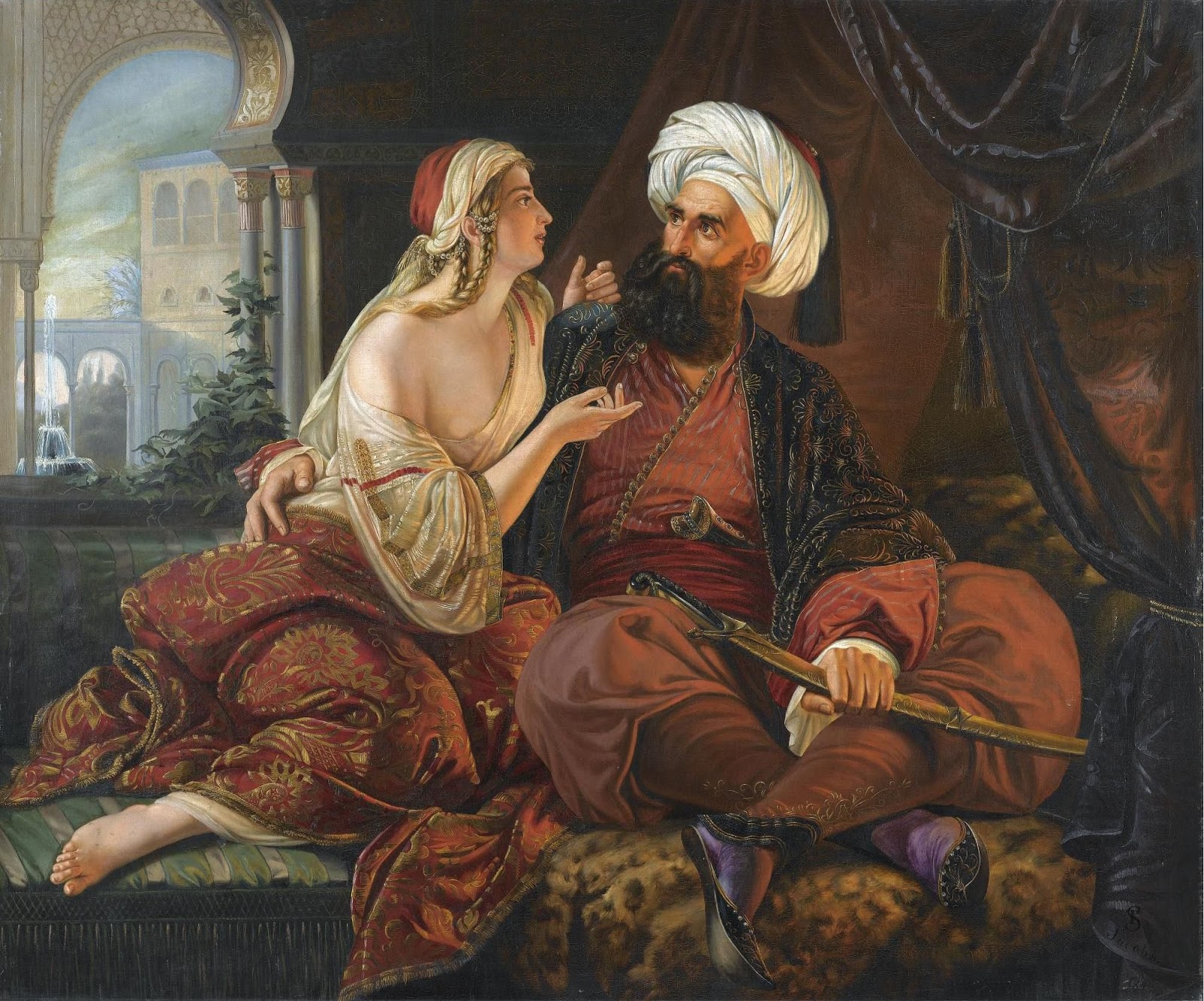
Alexandre Dumas | Alì Pascià (novel), 1840 | Painting by Emil Jacobs (1802-1866) Ali Pasha and Kira Vassiliki, 1844

  • "There are two ways of seeing: with the body and with the soul. The body's sight can sometimes forget, but the soul remembers forever".
  • "Ci sono due modi di vedere: con il corpo e con l'anima. La vista del corpo a volte può dimenticare, ma l'anima ricorda per sempre".
  • "As a general rule…people ask for advice only in order not to follow it; or if they do follow it, in order to have someone to blame for giving it".
  • "In generale, si chiedono consigli solo per non seguirli o, se si seguono, è per avere qualcuno da rimproverare per averli dati".

  • Read More

    Alexandre Dumas (1802-1870) | Quotes / Aforismi

    Alexandre Dumas | Alì Pascià (novel), 1840 | Painting by Emil Jacobs (1802-1866) Ali Pasha and Kira Vassiliki, 1844

  • "There are two ways of seeing: with the body and with the soul. The body's sight can sometimes forget, but the soul remembers forever".
  • "Ci sono due modi di vedere: con il corpo e con l'anima. La vista del corpo a volte può dimenticare, ma l'anima ricorda per sempre".
  • "As a general rule…people ask for advice only in order not to follow it; or if they do follow it, in order to have someone to blame for giving it".
  • "In generale, si chiedono consigli solo per non seguirli o, se si seguono, è per avere qualcuno da rimproverare per averli dati".

  • Textual description of firstImageUrl

    Josef Loukota (1879-1967) | Portrait / Genre painter


    Josef Loukota, baptized Josef Jindřich, was a Czech painter🎨, graphic artist, illustrator and professor of the Prague Academy.
    He studied in 1896-1899 at the Prague School of Applied Arts under K.V. Mašek and E.K. Liška; then - at the Prague Academy under Václav Brožík and Hanuš Schwaiger.

    Read More

    Josef Loukota (1879-1967) | Portrait / Genre painter


    Josef Loukota, baptized Josef Jindřich, was a Czech painter🎨, graphic artist, illustrator and professor of the Prague Academy.
    He studied in 1896-1899 at the Prague School of Applied Arts under K.V. Mašek and E.K. Liška; then - at the Prague Academy under Václav Brožík and Hanuš Schwaiger.

    Textual description of firstImageUrl

    William R. Leigh (1866-1955) | Western scenes painter


    William Robinson Leigh was an American🎨 artist and illustrator, who was known for his painted Western scenes. William Robinson Leigh was born at Maidstone Manor Farm, Berkeley County, West Virginia.
    He entered the Maryland Institute for the Promotion of the Mechanic Arts (now known as Maryland Institute College of Art) at age 14, then attended the Royal Academy in Munich.

    Read More

    William R. Leigh (1866-1955) | Western scenes painter


    William Robinson Leigh was an American🎨 artist and illustrator, who was known for his painted Western scenes. William Robinson Leigh was born at Maidstone Manor Farm, Berkeley County, West Virginia.
    He entered the Maryland Institute for the Promotion of the Mechanic Arts (now known as Maryland Institute College of Art) at age 14, then attended the Royal Academy in Munich.

    Textual description of firstImageUrl

    Edward B. Gordon, 1966 | Figurative painter


    Edward B. Gordon is a German painter🎨 who specializes in impressionist portraits.
    An observer, a chronicler of moments, Edward B. Gordon is a passionate portraitist of modern daily life who splits his time between London and Berlin.
    His works use muted, delicate hues and soft brushstrokes to create emotive depictions of his subjects.

    Read More

    Edward B. Gordon, 1966 | Figurative painter


    Edward B. Gordon is a German painter🎨 who specializes in impressionist portraits.
    An observer, a chronicler of moments, Edward B. Gordon is a passionate portraitist of modern daily life who splits his time between London and Berlin.
    His works use muted, delicate hues and soft brushstrokes to create emotive depictions of his subjects.

    Textual description of firstImageUrl

    Charles Baudelaire / Roberto Ferri | Tristezze della luna

    This evening the Moon dreams more languidly,
    Like a beauty who on many cushions rests,
    And with her light hand fondles lingeringly,
    Before she sleeps, the slope of her sweet breasts.

    Roberto Ferri | Tristezze della luna

    Read More

    Charles Baudelaire / Roberto Ferri | Tristezze della luna

    This evening the Moon dreams more languidly,
    Like a beauty who on many cushions rests,
    And with her light hand fondles lingeringly,
    Before she sleeps, the slope of her sweet breasts.

    Roberto Ferri | Tristezze della luna

    Textual description of firstImageUrl

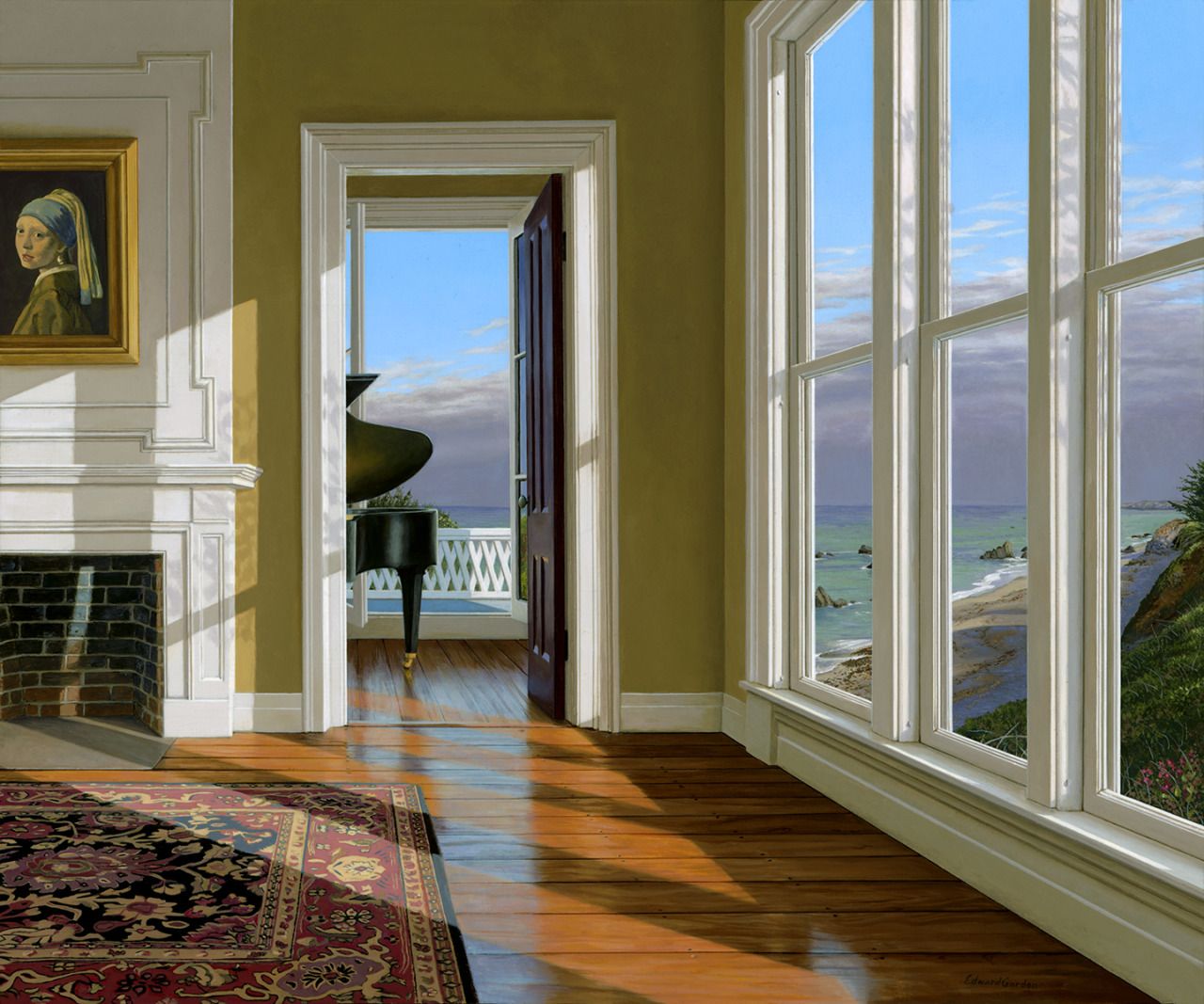
    Edward Gordon, 1940 | Interior painter


    Edward Gordon was born in Ocean City, New Jersey and received a BA from Rutgers University.
    Over the past ten years Edward has received numerous honors and awards🎨 including: Cover and Center Spread, Yankee Magazine, March 2000; The Artists Magazine, May 1995; Cover Competition, First Prize, Landscape Division, The Artists Magazine; Finalist in the 1994 Arts for the Parks Competition

    Read More

    Edward Gordon, 1940 | Interior painter


    Edward Gordon was born in Ocean City, New Jersey and received a BA from Rutgers University.
    Over the past ten years Edward has received numerous honors and awards🎨 including: Cover and Center Spread, Yankee Magazine, March 2000; The Artists Magazine, May 1995; Cover Competition, First Prize, Landscape Division, The Artists Magazine; Finalist in the 1994 Arts for the Parks Competition

    Textual description of firstImageUrl

    Marc Chagall | Le vetrate

    Uno dei maggiori contributi di Chagall all'arte è stato il suo lavoro con le vetrate.
    Questo mezzo gli ha permesso di esprimere ulteriormente il suo desiderio di creare colori intensi e freschi e ha avuto il vantaggio aggiuntivo della luce naturale e della rifrazione che interagiscono e cambiano costantemente: tutto, dalla posizione in cui si trova lo spettatore al tempo esterno, altera l'effetto visivo (sebbene questo non è il caso delle sue finestre Hadassah).
    Fu solo nel 1956, quando aveva quasi 70 anni, che disegnò le finestre per la chiesa di Assy, il suo primo grande progetto.
    Famose in tutto il mondo, le magnifiche fiabesche vetrate policrome, della misura di metri 4 per 2,8 circa, sono state realizzate dal grande artista in due anni di lavoro, tra il 1960-1961.
    La prima vetrata fu montata nel 1967, mentre le ultime vennero installate nel 1985, lo stesso anno in cui Chagall morì all'età di 98 anni. Si trovano nella sinagoga del centro medico universitario Hadassah di Gerusalemme e nell'atrio aperto al pubblico del Palazzo delle Nazioni Unite ONU a New York, NY, Stati Uniti d'America.


    Read More

    Marc Chagall | Le vetrate

    Uno dei maggiori contributi di Chagall all'arte è stato il suo lavoro con le vetrate.
    Questo mezzo gli ha permesso di esprimere ulteriormente il suo desiderio di creare colori intensi e freschi e ha avuto il vantaggio aggiuntivo della luce naturale e della rifrazione che interagiscono e cambiano costantemente: tutto, dalla posizione in cui si trova lo spettatore al tempo esterno, altera l'effetto visivo (sebbene questo non è il caso delle sue finestre Hadassah).
    Fu solo nel 1956, quando aveva quasi 70 anni, che disegnò le finestre per la chiesa di Assy, il suo primo grande progetto.
    Famose in tutto il mondo, le magnifiche fiabesche vetrate policrome, della misura di metri 4 per 2,8 circa, sono state realizzate dal grande artista in due anni di lavoro, tra il 1960-1961.
    La prima vetrata fu montata nel 1967, mentre le ultime vennero installate nel 1985, lo stesso anno in cui Chagall morì all'età di 98 anni. Si trovano nella sinagoga del centro medico universitario Hadassah di Gerusalemme e nell'atrio aperto al pubblico del Palazzo delle Nazioni Unite ONU a New York, NY, Stati Uniti d'America.


    Textual description of firstImageUrl

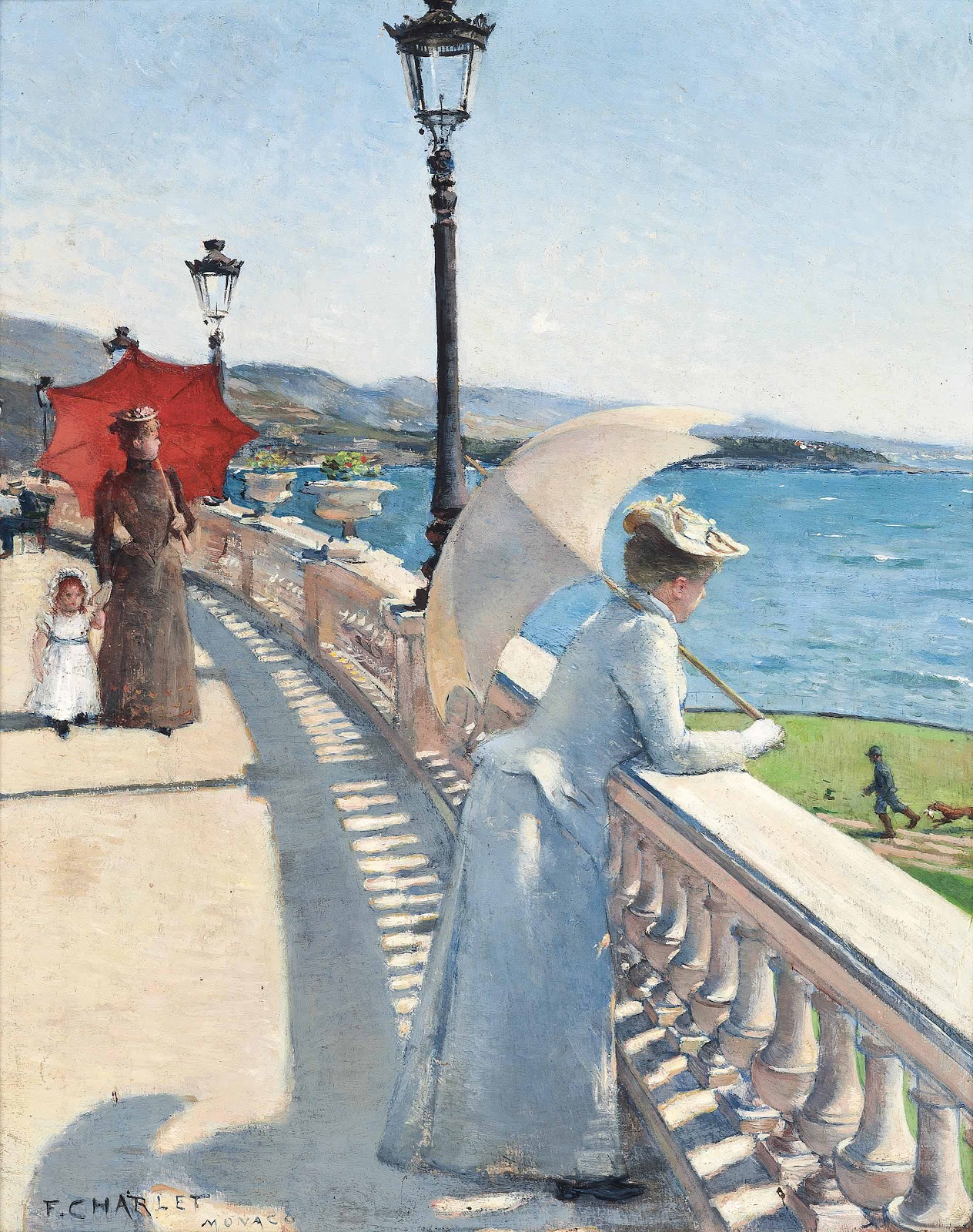
    Cesare Pavese | Agony / Agonia, 1933

    Frantz Charlet (Belgian Impressionist painter, 1862-1928) | A promenade in Vonaco

    I’ll wander the streets till I’m dead tired,
    I’ll learn to live alone and look each passing face
    straight in the eye and still be what I am.
    This coolness ascending in me, searching through my veins,
    is an awakening each morning that I’ve never felt
    so real -except that I feel stronger
    than my body, and a colder shiver comes each morning now.

    The mornings I had at twenty are now far: away.
    And tomorrow, twenty-one: tomorrow I’ll go out in tile
    streets -
    I remember every stone, and the layers of the sky.

    Read More

    Cesare Pavese | Agony / Agonia, 1933

    Frantz Charlet (Belgian Impressionist painter, 1862-1928) | A promenade in Vonaco

    I’ll wander the streets till I’m dead tired,
    I’ll learn to live alone and look each passing face
    straight in the eye and still be what I am.
    This coolness ascending in me, searching through my veins,
    is an awakening each morning that I’ve never felt
    so real -except that I feel stronger
    than my body, and a colder shiver comes each morning now.

    The mornings I had at twenty are now far: away.
    And tomorrow, twenty-one: tomorrow I’ll go out in tile
    streets -
    I remember every stone, and the layers of the sky.

    Textual description of firstImageUrl

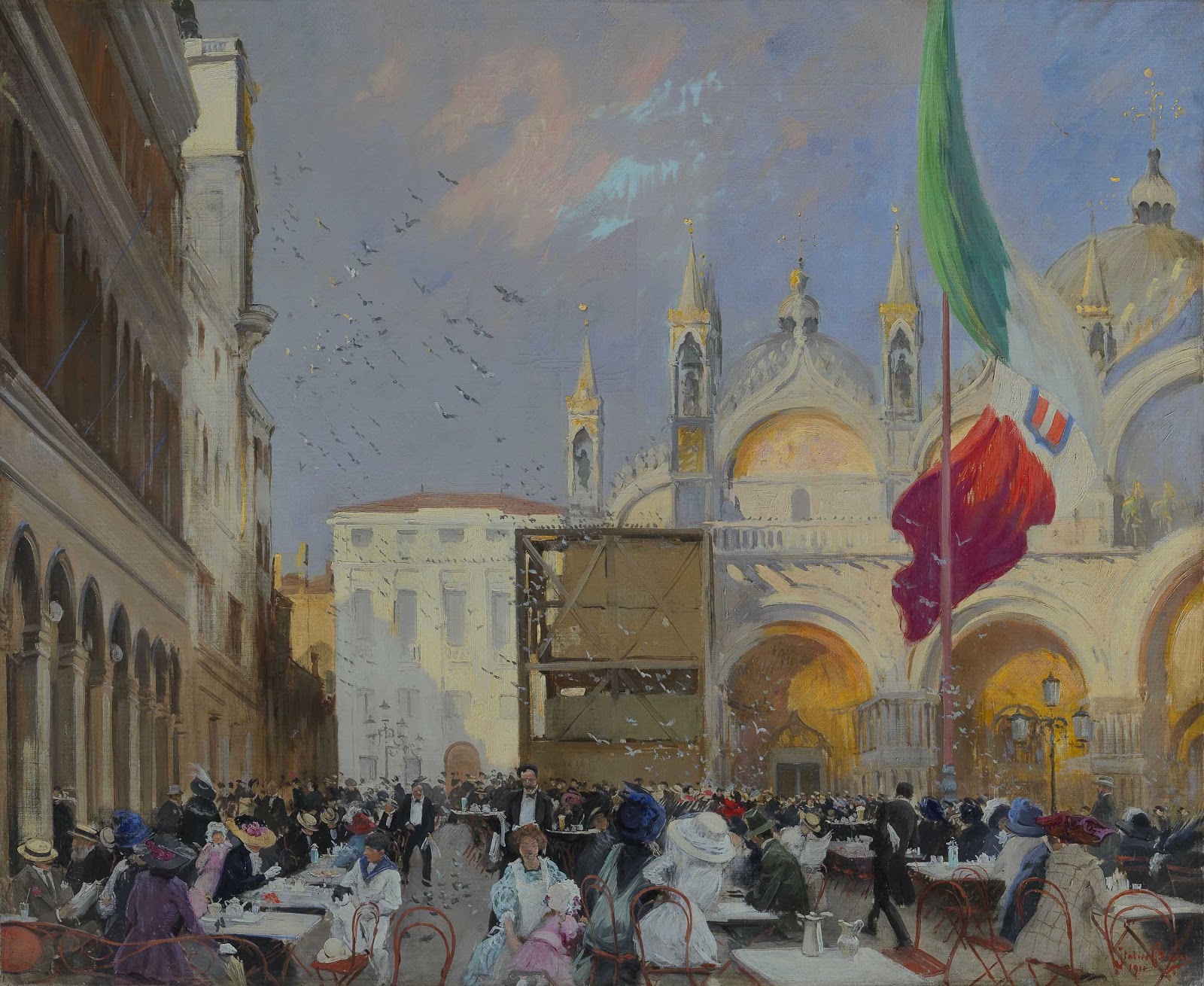
    Italico Brass (1870-1943)


    Italico Brass was an Italian painter🎨 and set designer, of irredentist political trends. He studied at the Academy of Fine Arts, Munich under the landscape painter Karl Raupp (1837-1918).
    In 1888 he moved to Paris, which had become the world’s contemporary art capital and a destination of choice for many Italian artists.
    There he married a Russian woman called Lina Rebecca Vidgoff.
    The couple settled permanently in Venice in 1895.

    Read More

    Italico Brass (1870-1943)


    Italico Brass was an Italian painter🎨 and set designer, of irredentist political trends. He studied at the Academy of Fine Arts, Munich under the landscape painter Karl Raupp (1837-1918).
    In 1888 he moved to Paris, which had become the world’s contemporary art capital and a destination of choice for many Italian artists.
    There he married a Russian woman called Lina Rebecca Vidgoff.
    The couple settled permanently in Venice in 1895.