Textual description of firstImageUrl

Diego Velázquez (1599-1660)


Diego Velázquez, in full Diego Rodríguez de Silva y Velázquez, was the most important Spanish painter of the 17th century, a giant of Western art.
Velázquez is universally acknowledged as one of the world’s greatest artists.
The naturalistic style in which he was trained provided a language for the expression of his remarkable power of observation in portraying both the living model and still life.

Read More

Diego Velázquez (1599-1660)


Diego Velázquez, in full Diego Rodríguez de Silva y Velázquez, was the most important Spanish painter of the 17th century, a giant of Western art.
Velázquez is universally acknowledged as one of the world’s greatest artists.
The naturalistic style in which he was trained provided a language for the expression of his remarkable power of observation in portraying both the living model and still life.

Textual description of firstImageUrl

Leonid Afremov | The summer sun of Sicily


Leonid Afremov (1955-2019) was an Jewish artist of Belarusian descent, mainly known as being a self-representing artist who promotes and sells his work exclusively over the internet with very little exhibitions and involvement of dealers and galleries.
Afremov was born in Vitebsk - the same town where Marc Chagall began his artistic career -and passed away on August 19th 2019 from cardiac arrest in Playa Del Carmen.

Read More

Leonid Afremov | The summer sun of Sicily


Leonid Afremov (1955-2019) was an Jewish artist of Belarusian descent, mainly known as being a self-representing artist who promotes and sells his work exclusively over the internet with very little exhibitions and involvement of dealers and galleries.
Afremov was born in Vitebsk - the same town where Marc Chagall began his artistic career -and passed away on August 19th 2019 from cardiac arrest in Playa Del Carmen.

Textual description of firstImageUrl

Michael Ancher | Skagen girl in a red shawl, 1881

Michael Peter Ancher (1849-1927) came to Skagen in 1874 at the age of 25, and he was the only one of the visiting artists who settled permanently in the town.
He grew up on the island of Bornholm, and at the age of 16, he began his apprenticeship as a clerk at the Kalø Manor in Djursland.
Here, he began to draw and paint in his spare time, and in 1871 he was accepted as a student at the Royal Danish Academy of Fine Arts in Copenhagen.
Here, he met Karl Madsen, among others, who encouraged him to go to Skagen.

Michael Ancher | Skagen girl in a red shawl, 1881

Read More

Michael Ancher | Skagen girl in a red shawl, 1881

Michael Peter Ancher (1849-1927) came to Skagen in 1874 at the age of 25, and he was the only one of the visiting artists who settled permanently in the town.
He grew up on the island of Bornholm, and at the age of 16, he began his apprenticeship as a clerk at the Kalø Manor in Djursland.
Here, he began to draw and paint in his spare time, and in 1871 he was accepted as a student at the Royal Danish Academy of Fine Arts in Copenhagen.
Here, he met Karl Madsen, among others, who encouraged him to go to Skagen.

Michael Ancher | Skagen girl in a red shawl, 1881

Textual description of firstImageUrl

Wilhelm Tischbein | Goethe in the Roman Campagna, 1787


Title: Goethe in the Roman Campagna;
Author: Johann Heinrich Wilhelm Tischbein (German Neoclassical painter, 1751-1829);
Date: 1787;
Dimensions: 164.0 x 206.0 cm;
Medium: Oil on canvas;
Current location: Städel Museum, Frankfurt;
Acquisition: Acquired in 1887 as a gift by Baroness Adèle von Rothschild;
Status: On display, 1st upper level, Modern Art.

Read More

Wilhelm Tischbein | Goethe in the Roman Campagna, 1787


Title: Goethe in the Roman Campagna;
Author: Johann Heinrich Wilhelm Tischbein (German Neoclassical painter, 1751-1829);
Date: 1787;
Dimensions: 164.0 x 206.0 cm;
Medium: Oil on canvas;
Current location: Städel Museum, Frankfurt;
Acquisition: Acquired in 1887 as a gift by Baroness Adèle von Rothschild;
Status: On display, 1st upper level, Modern Art.

Textual description of firstImageUrl

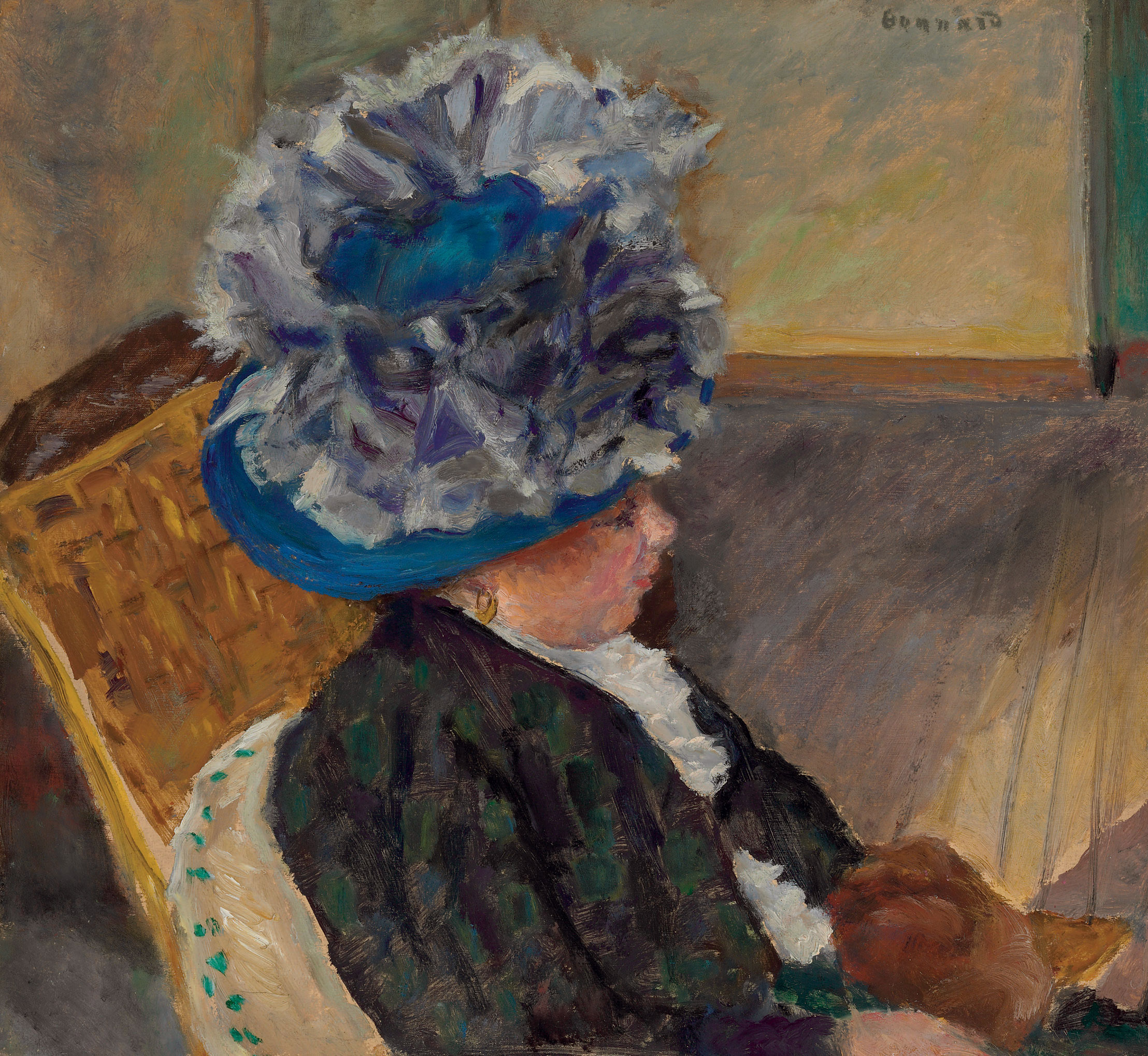
Pierre Bonnard (Francese, 1867-1947)

Pierre Bonnard è stato un pittore post-impressionista Francese, appartenente al Gruppo degli artisti Nabis.
Dopo il diploma in legge decide di dedicarsi alla pittura.
A Parigi, nel 1888 segue i corsi dell’Accademia Julian e dell’Ecole des Beaux-Arts.
È in questo periodo che conosce artisti come Paul Sérusier, Maurice Denis, Paul Ranson, Édouard Vuillard e Ker-Xavier Roussel, con i quali forma il Gruppo dei Nabis -dall’ebraico che significa profeti, ispirati, e con i quali esporrà al Salon des Indépendants a partire dal 1891.


Read More

Pierre Bonnard (Francese, 1867-1947)

Pierre Bonnard è stato un pittore post-impressionista Francese, appartenente al Gruppo degli artisti Nabis.
Dopo il diploma in legge decide di dedicarsi alla pittura.
A Parigi, nel 1888 segue i corsi dell’Accademia Julian e dell’Ecole des Beaux-Arts.
È in questo periodo che conosce artisti come Paul Sérusier, Maurice Denis, Paul Ranson, Édouard Vuillard e Ker-Xavier Roussel, con i quali forma il Gruppo dei Nabis -dall’ebraico che significa profeti, ispirati, e con i quali esporrà al Salon des Indépendants a partire dal 1891.


Textual description of firstImageUrl

Gaetano Gandolfi (1734-1802)

Gaetano Gandolfi nasce a S. Matteo della Decima (Bologna), nel 1734.
Adolescente raggiunge a Bologna il fratello Ubaldo, per dedicarsi anch’egli agli studi artistici.
Fu allievo di Ercole Lelli, scultore ed anatomista, e di Felice Torelli.
Iscritto all’accademia Clementina si segnalò vincendo con raffinati rilievi numerosi premi Marsigli e con nudi d’accademia diversi premi Fiori.
Le prime opere pittoriche di Gaetano datano alla fine degli anni ’50 (S. Girolamo e S. Maria Maddalena, Bazzano, Oratorio del Suffragio; decorazione della galleria del Palazzo Malvasia con il fratello Ubaldo).


Read More

Gaetano Gandolfi (1734-1802)

Gaetano Gandolfi nasce a S. Matteo della Decima (Bologna), nel 1734.
Adolescente raggiunge a Bologna il fratello Ubaldo, per dedicarsi anch’egli agli studi artistici.
Fu allievo di Ercole Lelli, scultore ed anatomista, e di Felice Torelli.
Iscritto all’accademia Clementina si segnalò vincendo con raffinati rilievi numerosi premi Marsigli e con nudi d’accademia diversi premi Fiori.
Le prime opere pittoriche di Gaetano datano alla fine degli anni ’50 (S. Girolamo e S. Maria Maddalena, Bazzano, Oratorio del Suffragio; decorazione della galleria del Palazzo Malvasia con il fratello Ubaldo).


Textual description of firstImageUrl

J.H.W. Tischbein | Diogenes looking for an Honest Man, 1780


"Diogenes Looking for an Honest Man" is a painting attributed to German painter Johann Heinrich Wilhelm Tischbein (1751-1829).
It depicts Diogenes of Sinope with a lantern searching for an honest man.
Diogenes of Sinope used to stroll about in full daylight with a lamp; when asked what he was doing, he would answer, "I am just looking for an honest man".

Read More

J.H.W. Tischbein | Diogenes looking for an Honest Man, 1780


"Diogenes Looking for an Honest Man" is a painting attributed to German painter Johann Heinrich Wilhelm Tischbein (1751-1829).
It depicts Diogenes of Sinope with a lantern searching for an honest man.
Diogenes of Sinope used to stroll about in full daylight with a lamp; when asked what he was doing, he would answer, "I am just looking for an honest man".

Textual description of firstImageUrl

Henri Lebasque | Membro fondatore del Salon d'Automne

Henri Lebasque (1865-1937) fu membro fondatore del Salon d'Automne nel 1903 con il suo amico Henri Matisse ed espose al Salon des Indépendants.
Nacque in una famiglia modesta (il padre era bottaio) e si iscrisse all'Académie Colarossi nel 1886.
In seguito collaborò con Ferdinand Humbert agli affreschi del Panthéon per sei anni, a partire dal 1888.


Read More

Henri Lebasque | Membro fondatore del Salon d'Automne

Henri Lebasque (1865-1937) fu membro fondatore del Salon d'Automne nel 1903 con il suo amico Henri Matisse ed espose al Salon des Indépendants.
Nacque in una famiglia modesta (il padre era bottaio) e si iscrisse all'Académie Colarossi nel 1886.
In seguito collaborò con Ferdinand Humbert agli affreschi del Panthéon per sei anni, a partire dal 1888.


Textual description of firstImageUrl

Jean-Léon Gérôme | Pittore / Scultore Accademico

Jean-Léon Gérôme (Vesoul, 11 maggio 1824 - Parigi, 28 gennaio 1904) è stato un pittore e scultore Francese.
Si oppose al movimento impressionista iniziato da Monet e Manet - continuando a sviluppare e conservare il neoclassicismo francese.
Le sue opere sono principalmente di tema storico, mitologico ed orientalistico portando la tradizione dell'Impero francese ad un climax.
La gamma delle sue opere comprendeva la pittura storica, la mitologia greca, l'orientalismo, i ritratti e altre materie, portando la tradizione della pittura accademica al culmine artistico.


Read More

Jean-Léon Gérôme | Pittore / Scultore Accademico

Jean-Léon Gérôme (Vesoul, 11 maggio 1824 - Parigi, 28 gennaio 1904) è stato un pittore e scultore Francese.
Si oppose al movimento impressionista iniziato da Monet e Manet - continuando a sviluppare e conservare il neoclassicismo francese.
Le sue opere sono principalmente di tema storico, mitologico ed orientalistico portando la tradizione dell'Impero francese ad un climax.
La gamma delle sue opere comprendeva la pittura storica, la mitologia greca, l'orientalismo, i ritratti e altre materie, portando la tradizione della pittura accademica al culmine artistico.


Textual description of firstImageUrl

Henri Lebasque (Post-impressionist painter, 1865-1937)


Famed as a painter of joy and light, Lebasque is admired for the intimacy of his subject matter and his unique delight in color and form.
Born in Champigné, Lebasque first trained in Angers at the School of Beaux-Arts and from 1886 onwards in Paris. Then he entered the atelier of the portraitist Leon Bonnat and began to exhibit at the annual art society exhibitions and the Paris Salons.
He later assisted Ferdinand Humbert with the decorative murals of the Pantheon.

Read More

Henri Lebasque (Post-impressionist painter, 1865-1937)


Famed as a painter of joy and light, Lebasque is admired for the intimacy of his subject matter and his unique delight in color and form.
Born in Champigné, Lebasque first trained in Angers at the School of Beaux-Arts and from 1886 onwards in Paris. Then he entered the atelier of the portraitist Leon Bonnat and began to exhibit at the annual art society exhibitions and the Paris Salons.
He later assisted Ferdinand Humbert with the decorative murals of the Pantheon.

Textual description of firstImageUrl

Gaetano Esposito (1858-1911)

Gaetano Esposito è stato un pittore Italiano.
Appresi i primi rudimenti della pittura da Gaetano D'Agostino, fu poi allievo dell'Accademia di belle arti di Napoli, dove seguì i corsi di Filippo Palizzi, di Domenico Morelli e di Stanislao Lista.


Read More

Gaetano Esposito (1858-1911)

Gaetano Esposito è stato un pittore Italiano.
Appresi i primi rudimenti della pittura da Gaetano D'Agostino, fu poi allievo dell'Accademia di belle arti di Napoli, dove seguì i corsi di Filippo Palizzi, di Domenico Morelli e di Stanislao Lista.


Textual description of firstImageUrl

William Bouguereau | L’Orientale à la grenade, 1875


At the close of the 1860s, William-Adolphe Bouguereau’s (1825-1905) reputation had been secured by his masterful portrayals of peasant life in the French countryside.
Yet the artist did not limit himself in sources of inspiration and, like many of his contemporaries, became interested in the people and culture of North Africa and the Middle East.

Read More

William Bouguereau | L’Orientale à la grenade, 1875


At the close of the 1860s, William-Adolphe Bouguereau’s (1825-1905) reputation had been secured by his masterful portrayals of peasant life in the French countryside.
Yet the artist did not limit himself in sources of inspiration and, like many of his contemporaries, became interested in the people and culture of North Africa and the Middle East.

Textual description of firstImageUrl

Konstantin Gorbatov | Boats in a Harbour, 1928


Charmed by Italy’s romantic aesthetics and inspired by its warmth and light, the Post-Impressionist artist Konstantin Ivanovich Gorbatov (1876-1945) created some of his most accomplished paintings while living on the island of Capri in the early 1920s.
Gorbatov and his wife emigrated to Berlin in 1926, but he returned annually to Italy until the beginning of World War II.
The monumental Boats in a Harbour, dated 1928, is an exquisite example of Gorbatov’s strength as a colourist and his bold mastery of light and shadow.

Read More

Konstantin Gorbatov | Boats in a Harbour, 1928


Charmed by Italy’s romantic aesthetics and inspired by its warmth and light, the Post-Impressionist artist Konstantin Ivanovich Gorbatov (1876-1945) created some of his most accomplished paintings while living on the island of Capri in the early 1920s.
Gorbatov and his wife emigrated to Berlin in 1926, but he returned annually to Italy until the beginning of World War II.
The monumental Boats in a Harbour, dated 1928, is an exquisite example of Gorbatov’s strength as a colourist and his bold mastery of light and shadow.

Textual description of firstImageUrl

Michele Catti | Landscape painter of the Belle Époque


Michele Catti (1855-1914) was an Italian artist, considered one of the most important Sicilian landscape painters of the Belle Époque.
Catti was born in Palermo on April 5, 1855 to Andrea Catti and Carmela Riotta.
He was the second son in a family of 4 brothers and 3 sisters.
His father, born to Michele Catti and Concetta Natoli of the princely family originally from Patti, belonged to a prominent family of judges and lawyers in the Bourbon administration.
He wanted Catti to also start legal studies in Palermo and was therefore sent to his aunt Sabina Distefano in Palermo, as the family had relocated to nearby Carini.

Read More

Michele Catti | Landscape painter of the Belle Époque


Michele Catti (1855-1914) was an Italian artist, considered one of the most important Sicilian landscape painters of the Belle Époque.
Catti was born in Palermo on April 5, 1855 to Andrea Catti and Carmela Riotta.
He was the second son in a family of 4 brothers and 3 sisters.
His father, born to Michele Catti and Concetta Natoli of the princely family originally from Patti, belonged to a prominent family of judges and lawyers in the Bourbon administration.
He wanted Catti to also start legal studies in Palermo and was therefore sent to his aunt Sabina Distefano in Palermo, as the family had relocated to nearby Carini.

Textual description of firstImageUrl

Camille Pissarro (1830-1903)


Camille Pissarro, in full Jacob-Abraham-Camille Pissarro, painter and printmaker who was a key figure in the history of Impressionism.
Pissarro was the only artist to show his work in all eight Impressionist group exhibitions; throughout his career he remained dedicated to the idea of such alternative forums of exhibition.

Read More

Camille Pissarro (1830-1903)


Camille Pissarro, in full Jacob-Abraham-Camille Pissarro, painter and printmaker who was a key figure in the history of Impressionism.
Pissarro was the only artist to show his work in all eight Impressionist group exhibitions; throughout his career he remained dedicated to the idea of such alternative forums of exhibition.

Textual description of firstImageUrl

Camille Pissarro | White Frost, Woman Breaking Up Wood, 1890

  • Painting, art in general, enchants me. It is my life. What else matters? When you put all your soul into a work, all that is noble in you, you cannot fail to find a kindred soul who understands you, and you do not need a host of such spirits. Is not that all an artist should wish for?
  • When you do a thing with your whole soul and everything that is noble within you, you always find your counterpart.
  • It is only by drawing often, drawing everything, drawing incessantly, that one fine day you discover to your surprise that you have rendered something in its true character.
  • Work at the same time on sky, water, branches, ground, keeping everything going on an equal basis... Don't be afraid of putting on colour... Paint generously and unhesitatingly, for it is best not to lose the first impression.

Read More

Camille Pissarro | White Frost, Woman Breaking Up Wood, 1890

  • Painting, art in general, enchants me. It is my life. What else matters? When you put all your soul into a work, all that is noble in you, you cannot fail to find a kindred soul who understands you, and you do not need a host of such spirits. Is not that all an artist should wish for?
  • When you do a thing with your whole soul and everything that is noble within you, you always find your counterpart.
  • It is only by drawing often, drawing everything, drawing incessantly, that one fine day you discover to your surprise that you have rendered something in its true character.
  • Work at the same time on sky, water, branches, ground, keeping everything going on an equal basis... Don't be afraid of putting on colour... Paint generously and unhesitatingly, for it is best not to lose the first impression.

Textual description of firstImageUrl

Konstantin Korovin (1861-1939)


Konstantin Alekseyevich Korovin /Russian: Константи́н Алексе́евич Коро́вин was a leading Russian Impressionist painter.
Konstantin was born in Moscow to a merchant family officially registered as "peasants of Vladimir Gubernia".
His father, Aleksey Mikhailovich Korovin, earned a university degree and was more interested in arts and music than in the family business established by Konstantin's grandfather. Konstantin's older brother Sergei Korovin was a notable realist painter.

Read More

Konstantin Korovin (1861-1939)


Konstantin Alekseyevich Korovin /Russian: Константи́н Алексе́евич Коро́вин was a leading Russian Impressionist painter.
Konstantin was born in Moscow to a merchant family officially registered as "peasants of Vladimir Gubernia".
His father, Aleksey Mikhailovich Korovin, earned a university degree and was more interested in arts and music than in the family business established by Konstantin's grandfather. Konstantin's older brother Sergei Korovin was a notable realist painter.

Textual description of firstImageUrl

Thomas Moran | Luminist painter

Thomas Moran (1837-1926) in Bolton, England, not far from Manchester, the birthplace of the Industrial Revolution.
Several generations of the Moran family had worked as handloom weavers in Bolton until the introduction of power looms radically changed the industry.
In 1842/1843, seeking public education for his children and economic opportunity in a new land, Thomas Moran, Sr., journeyed to America.


Read More

Thomas Moran | Luminist painter

Thomas Moran (1837-1926) in Bolton, England, not far from Manchester, the birthplace of the Industrial Revolution.
Several generations of the Moran family had worked as handloom weavers in Bolton until the introduction of power looms radically changed the industry.
In 1842/1843, seeking public education for his children and economic opportunity in a new land, Thomas Moran, Sr., journeyed to America.


Textual description of firstImageUrl

Anders Zorn (1860-1920)


Anders Zorn, in full Anders Leonard Zorn, Swedish painter and etcher, internationally famed as one of the best genre and portrait painters in Europe at the end of the 19th century.
Zorn studied at the Stockholm academy and then travelled extensively throughout Europe. After working in England, France, and the United States, he returned to Mora in 1896.

Read More

Anders Zorn (1860-1920)


Anders Zorn, in full Anders Leonard Zorn, Swedish painter and etcher, internationally famed as one of the best genre and portrait painters in Europe at the end of the 19th century.
Zorn studied at the Stockholm academy and then travelled extensively throughout Europe. After working in England, France, and the United States, he returned to Mora in 1896.

Textual description of firstImageUrl

Anders Zorn | Omnibus, 1892

Anders Zorn | Omnibus (1891-1892) | Nationalmuseum, Stockholm (detail)

The electric evening light on the grand boulevards of Paris fascinated Anders Zorn (Swedish painter, 1860-1920).
With his virtuoso technique, he records here how it is reflected in the misted-up windows of an omnibus and falls on the faces and bodies of the passengers.
The main figure in the painting is the young woman with the square box. Behind her, a prostitute can be made out. Both represent the modern city, with its commercial attractions and dangers. | © Nationalmuseum, Stockholm

Read More

Anders Zorn | Omnibus, 1892

Anders Zorn | Omnibus (1891-1892) | Nationalmuseum, Stockholm (detail)

The electric evening light on the grand boulevards of Paris fascinated Anders Zorn (Swedish painter, 1860-1920).
With his virtuoso technique, he records here how it is reflected in the misted-up windows of an omnibus and falls on the faces and bodies of the passengers.
The main figure in the painting is the young woman with the square box. Behind her, a prostitute can be made out. Both represent the modern city, with its commercial attractions and dangers. | © Nationalmuseum, Stockholm