Textual description of firstImageUrl

Mary Cassatt (1844-1926)

Mary Stevenson Cassatt è stata una pittrice Statunitense. Visse molto tempo in Francia dove diventò amica ed allieva di Degas, esponendo poi le proprie opere insieme a quelle degli artisti del movimento impressionista.
Cassatt realizzò molti dipinti che ritraggono la vita sociale e privata delle donne della sua epoca, ponendo una particolare attenzione all'intimo legame che si realizza tra le madri ed i loro bambini.


Read More

Mary Cassatt (1844-1926)

Mary Stevenson Cassatt è stata una pittrice Statunitense. Visse molto tempo in Francia dove diventò amica ed allieva di Degas, esponendo poi le proprie opere insieme a quelle degli artisti del movimento impressionista.
Cassatt realizzò molti dipinti che ritraggono la vita sociale e privata delle donne della sua epoca, ponendo una particolare attenzione all'intimo legame che si realizza tra le madri ed i loro bambini.


Textual description of firstImageUrl

Mary Cassatt | La Festa in Barca / The Boating Party, 1893/1894

This bold composition reveals the influence of the flat, patterned surfaces, simplified color, and unusual angles of Japanese prints, which enjoyed a huge vogue in Paris in the late 1800s.
The dark figure of the man compresses the picture onto the flat plane of the canvas, and the horizon is pushed to the top, collapsing a sense of distance. Our higher vantage point gives us an oblique view into the boat. Its form is divided into decorative shapes by the intersection of its horizontal supports.
After 1893, Mary Cassatt (1844-1926) began to spend many summers on the Mediterranean coast at Antibes.

Mary Cassatt | La Festa in Barca / The Boating Party, 1893/1894 | National Gallery of Art, Washington DC

Read More

Mary Cassatt | La Festa in Barca / The Boating Party, 1893/1894

This bold composition reveals the influence of the flat, patterned surfaces, simplified color, and unusual angles of Japanese prints, which enjoyed a huge vogue in Paris in the late 1800s.
The dark figure of the man compresses the picture onto the flat plane of the canvas, and the horizon is pushed to the top, collapsing a sense of distance. Our higher vantage point gives us an oblique view into the boat. Its form is divided into decorative shapes by the intersection of its horizontal supports.
After 1893, Mary Cassatt (1844-1926) began to spend many summers on the Mediterranean coast at Antibes.

Mary Cassatt | La Festa in Barca / The Boating Party, 1893/1894 | National Gallery of Art, Washington DC

Textual description of firstImageUrl

Emily Dickinson | So the Eyes accost and sunder / Così gli Occhi si accostano e si spezzano..

Così s'incontrano, così si separano
gli sguardi in una folla -
per sempre impressi possono restare -
tanto può un'espressione

Johannes Vermeer | The Girl with a Pearl Earring, 1665 (detail)

Read More

Emily Dickinson | So the Eyes accost and sunder / Così gli Occhi si accostano e si spezzano..

Così s'incontrano, così si separano
gli sguardi in una folla -
per sempre impressi possono restare -
tanto può un'espressione

Johannes Vermeer | The Girl with a Pearl Earring, 1665 (detail)

Textual description of firstImageUrl

Jacques Prévert | Semplice come il Buongiorno / Simple Comme Bonjour

L'amore è chiaro come il giorno
L'amore è semplice come il buongiorno
l'amore è nudo come la mano
ma è il tuo amore il mio amore
perché parlare di grande amore
perché cantare alla grande vita?

Daniel Gerhartz | Bohemian

Read More

Jacques Prévert | Semplice come il Buongiorno / Simple Comme Bonjour

L'amore è chiaro come il giorno
L'amore è semplice come il buongiorno
l'amore è nudo come la mano
ma è il tuo amore il mio amore
perché parlare di grande amore
perché cantare alla grande vita?

Daniel Gerhartz | Bohemian

Textual description of firstImageUrl

Walt Whitman | The voice of the rain / La voce della pioggia

And who art thou?
Said I to the soft-falling shower,
Which, strange to tell, gave me an answer, as here translated:
I am the Poem of Earth, said the voice of the rain,
Eternal I rise impalpable out of the land and the bottomless sea,
Upward to heaven, whence, vaguely form'd, altogether changed, and
yet the same,

Claude Monet | The Rain (La pluie), 1886-1887

Read More

Walt Whitman | The voice of the rain / La voce della pioggia

And who art thou?
Said I to the soft-falling shower,
Which, strange to tell, gave me an answer, as here translated:
I am the Poem of Earth, said the voice of the rain,
Eternal I rise impalpable out of the land and the bottomless sea,
Upward to heaven, whence, vaguely form'd, altogether changed, and
yet the same,

Claude Monet | The Rain (La pluie), 1886-1887

Textual description of firstImageUrl

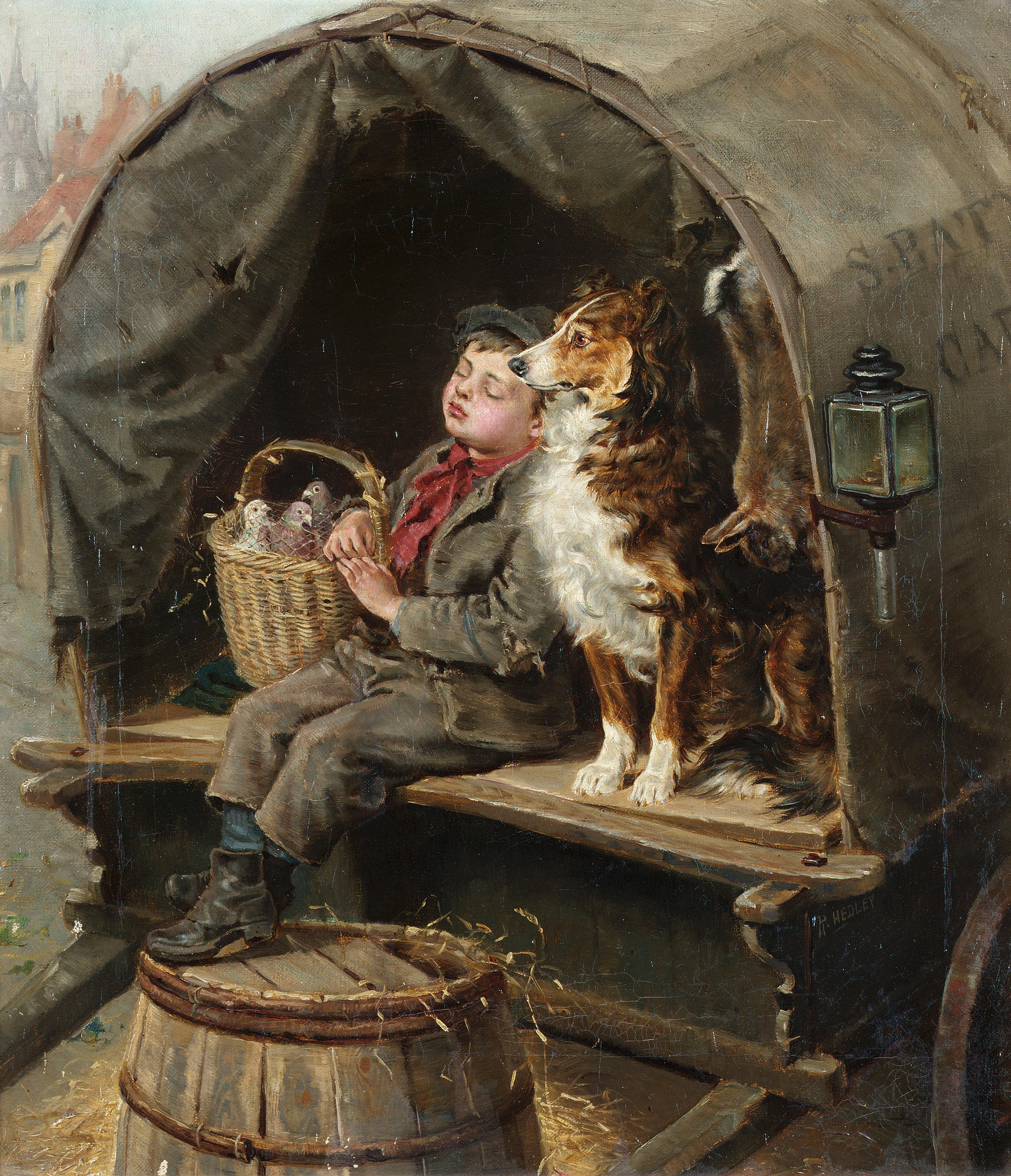
Ralph Hedley (1851-1913) | Pittore di genere

Ralph Hedley è stato un pittore, intagliatore ed illustratore realista, noto soprattutto per i suoi dipinti che ritraggono scene di vita quotidiana nel nord-est dell'Inghilterra.

Biografia

Nato a Gilling West vicino a Richmond, nel North Yorkshire, Ralph ei suoi genitori Richard e Anne Hedley si trasferirono a Newcastle upon Tyne intorno al 1850, sull'onda delle opportunità industriali.
All'età di circa 13 anni, fu apprendista di Thomas Tweedy nei suoi laboratori di intaglio, studiando contemporaneamente arte e design alla "Government school" di Newcastle, e frequentando corsi serali alla Life School sotto William Bell Scott.
All'età di 14 anni è stato insignito di una medaglia di bronzo dal Dipartimento di Arte e Scienza del governo.


Read More

Ralph Hedley (1851-1913) | Pittore di genere

Ralph Hedley è stato un pittore, intagliatore ed illustratore realista, noto soprattutto per i suoi dipinti che ritraggono scene di vita quotidiana nel nord-est dell'Inghilterra.

Biografia

Nato a Gilling West vicino a Richmond, nel North Yorkshire, Ralph ei suoi genitori Richard e Anne Hedley si trasferirono a Newcastle upon Tyne intorno al 1850, sull'onda delle opportunità industriali.
All'età di circa 13 anni, fu apprendista di Thomas Tweedy nei suoi laboratori di intaglio, studiando contemporaneamente arte e design alla "Government school" di Newcastle, e frequentando corsi serali alla Life School sotto William Bell Scott.
All'età di 14 anni è stato insignito di una medaglia di bronzo dal Dipartimento di Arte e Scienza del governo.


Textual description of firstImageUrl

Charles Courtney Curran | Lady with a Bouquet (Snowballs) 1890

The genre painter Charles Courtney Curran is best known for his canvases depicting beautiful ladies in pleasant settings.
Here, a young woman–the artist’s wife Grace Wickham Curran - arranges a bouquet of snowballs, pausing to take in their sweet fragrance.
The small scale of the painting matches the intimacy of the moment.
Her delicate features, light green shawl and blossom-like hat equate her to a flower, suggesting that she is as lovely and dainty as the blooms she savors. Curran’s choice of flower is likely a deliberate one.
At the time this work was painted, bouquets were used to convey messages, with each flower having a specific symbolic meaning.
According to the Victorian "language of flowers", the snowball symbolized thoughts of heaven, adding an air of Christian piety to this work. | © Birmingham Museum of Art

Charles Courtney Curran | Lady with a Bouquet, 1890 | Birmingham Museum of Art

Read More

Charles Courtney Curran | Lady with a Bouquet (Snowballs) 1890

The genre painter Charles Courtney Curran is best known for his canvases depicting beautiful ladies in pleasant settings.
Here, a young woman–the artist’s wife Grace Wickham Curran - arranges a bouquet of snowballs, pausing to take in their sweet fragrance.
The small scale of the painting matches the intimacy of the moment.
Her delicate features, light green shawl and blossom-like hat equate her to a flower, suggesting that she is as lovely and dainty as the blooms she savors. Curran’s choice of flower is likely a deliberate one.
At the time this work was painted, bouquets were used to convey messages, with each flower having a specific symbolic meaning.
According to the Victorian "language of flowers", the snowball symbolized thoughts of heaven, adding an air of Christian piety to this work. | © Birmingham Museum of Art

Charles Courtney Curran | Lady with a Bouquet, 1890 | Birmingham Museum of Art

Textual description of firstImageUrl

Jorge Luis Borges | Con che cosa ti posso trattenere? / What can I hold you with?

Con cosa posso trattenerti?
Ti offro strade difficili, tramonti disperati,
la luna di squallide periferie.

Ti offro le amarezze di un uomo
che ha guardato a lungo la triste luna.

Ti offro i miei antenati, i miei morti,
i fantasmi a cui i viventi hanno reso onore col marmo:
il padre di mio padre ucciso sulla frontiera di Buenos Aires,
due pallottole attraverso i suoi polmoni, barbuto e morto,

Jules-Alexis Muenier (1863-1942) | Hamnen vid Villefranche Nizza, 1894 | Finnish National Gallery

Read More

Jorge Luis Borges | Con che cosa ti posso trattenere? / What can I hold you with?

Con cosa posso trattenerti?
Ti offro strade difficili, tramonti disperati,
la luna di squallide periferie.

Ti offro le amarezze di un uomo
che ha guardato a lungo la triste luna.

Ti offro i miei antenati, i miei morti,
i fantasmi a cui i viventi hanno reso onore col marmo:
il padre di mio padre ucciso sulla frontiera di Buenos Aires,
due pallottole attraverso i suoi polmoni, barbuto e morto,

Jules-Alexis Muenier (1863-1942) | Hamnen vid Villefranche Nizza, 1894 | Finnish National Gallery

Textual description of firstImageUrl

Jorge Luis Borges | Learning / Imparerai / Aprenderas

After some time, you learn the subtle difference between
holding a hand
and imprisoning a soul;
You learn that love does not equal sex,
and that company does not equal security,
and you start to learn….

That kisses are not contracts and gifts are not promises,
and you start to accept defeat with the head up high
and open eyes,

Albrecht Dürer | Study of hands, 1506

Read More

Jorge Luis Borges | Learning / Imparerai / Aprenderas

After some time, you learn the subtle difference between
holding a hand
and imprisoning a soul;
You learn that love does not equal sex,
and that company does not equal security,
and you start to learn….

That kisses are not contracts and gifts are not promises,
and you start to accept defeat with the head up high
and open eyes,

Albrecht Dürer | Study of hands, 1506

Textual description of firstImageUrl

Maria Catharina Wiik

Maria Wiik (Helsinki, 1853-1928) è stata una eccellente ritrattista Finlandese, che si distinse anche nei paesaggi e nelle nature morte. Maria Catharina Wiik nacque a Helsinki in una famiglia colta e benestante. Suo padre, Jean Wiik, era architetto. Notato il suo precoce talento per il disegno, i genitori la incoraggiarono ad intraprendere la via dell'arte.
Maria quindi iniziò a studiare nel 1874, all'età di 21 anni, presso la scuola di disegno dell'"Accademia di belle arti di Helsinki" e, al tempo stesso, seguì dei corsi privati, sia con Adolf von Becker, sia presso lo studio di Severin Falkman.


Read More

Maria Catharina Wiik

Maria Wiik (Helsinki, 1853-1928) è stata una eccellente ritrattista Finlandese, che si distinse anche nei paesaggi e nelle nature morte. Maria Catharina Wiik nacque a Helsinki in una famiglia colta e benestante. Suo padre, Jean Wiik, era architetto. Notato il suo precoce talento per il disegno, i genitori la incoraggiarono ad intraprendere la via dell'arte.
Maria quindi iniziò a studiare nel 1874, all'età di 21 anni, presso la scuola di disegno dell'"Accademia di belle arti di Helsinki" e, al tempo stesso, seguì dei corsi privati, sia con Adolf von Becker, sia presso lo studio di Severin Falkman.


Textual description of firstImageUrl

Raymond Thibésart (1874-1968) | Impressionist painter

Raymond Thibésart was born into an affluent family in the town of Troyes (France), the historical capital of the Champagne region. Shortly afterwards, the family moved to Enghiens-les-Bains, an attractive spa town to the North of Paris.
It was here that they met the Boggios, a charismatic family who had just emigrated from Venezuala; Emilio Boggio, a talented Impressionist painter, became Thibésart's long-standing mentor and friend, encouraging his early promise and providing him with his first art lessons.


Read More

Raymond Thibésart (1874-1968) | Impressionist painter

Raymond Thibésart was born into an affluent family in the town of Troyes (France), the historical capital of the Champagne region. Shortly afterwards, the family moved to Enghiens-les-Bains, an attractive spa town to the North of Paris.
It was here that they met the Boggios, a charismatic family who had just emigrated from Venezuala; Emilio Boggio, a talented Impressionist painter, became Thibésart's long-standing mentor and friend, encouraging his early promise and providing him with his first art lessons.


Textual description of firstImageUrl

Gabriele Münter (1877-1962) Vita ed Opere

Gabriele Münter (Berlino, 19 febbraio 1877 - Murnau am Staffelsee, 19 maggio 1962) è stata una pittrice espressionista Tedesca. Compagna di Vasilij Kandinskij, fondò con lui, Franz Marc ed altri il movimento artistico espressionista Der Blaue Reiter (Il cavaliere azzurro).

Primi anni

Gabriele Münter era nata a Berlino da una famiglia dell'alta borghesia. A dispetto dei tempi, i suoi genitori incoraggiarono il suo desiderio di intraprendere la carriera artistica.
Cominciò a disegnare da piccola e crescendo prese lezioni private e frequentò la Scuola artistica femminile, dal momento che non era permesso alle donne di iscriversi alle Accademie tedesche. Decise infine di continuare gli studi altrove, poiché non trovava soddisfacente il percorso educativo.


Read More

Gabriele Münter (1877-1962) Vita ed Opere

Gabriele Münter (Berlino, 19 febbraio 1877 - Murnau am Staffelsee, 19 maggio 1962) è stata una pittrice espressionista Tedesca. Compagna di Vasilij Kandinskij, fondò con lui, Franz Marc ed altri il movimento artistico espressionista Der Blaue Reiter (Il cavaliere azzurro).

Primi anni

Gabriele Münter era nata a Berlino da una famiglia dell'alta borghesia. A dispetto dei tempi, i suoi genitori incoraggiarono il suo desiderio di intraprendere la carriera artistica.
Cominciò a disegnare da piccola e crescendo prese lezioni private e frequentò la Scuola artistica femminile, dal momento che non era permesso alle donne di iscriversi alle Accademie tedesche. Decise infine di continuare gli studi altrove, poiché non trovava soddisfacente il percorso educativo.


Textual description of firstImageUrl

Alfredo Roldan, 1965

Alfredo Roldan è nato a Madrid. All'età di 22 anni, senza una formazione artistica formale, inizia a disegnare professionalmente, vendendo i suoi lavori nei mercatini, presentando allo stesso tempo i suoi lavori in importanti concorsi, di cui ha vinto diversi.
È stato vincitore del premio concesso dal Comune di Madrid nel 1994 ed il suo talento è stato scoperto da una grande galleria.
Questo dipinto vincitore è ora esposto al Museo d'Arte Moderna di Madrid.
Nel 1996 è stato nominato Membro del Senato "Honoris Causa" dell'Accademia d'Arte Moderna di Roma.


Read More

Alfredo Roldan, 1965

Alfredo Roldan è nato a Madrid. All'età di 22 anni, senza una formazione artistica formale, inizia a disegnare professionalmente, vendendo i suoi lavori nei mercatini, presentando allo stesso tempo i suoi lavori in importanti concorsi, di cui ha vinto diversi.
È stato vincitore del premio concesso dal Comune di Madrid nel 1994 ed il suo talento è stato scoperto da una grande galleria.
Questo dipinto vincitore è ora esposto al Museo d'Arte Moderna di Madrid.
Nel 1996 è stato nominato Membro del Senato "Honoris Causa" dell'Accademia d'Arte Moderna di Roma.


Textual description of firstImageUrl

Jasper Francis Cropsey | Hudson River School painter

Jasper Francis Cropsey (1823-1900) è stato un pittore Statunitense.

Biografia

Jasper Cropsey nacque in una cittadina dello Stato di New York (Isola di Staten Island), nella fattoria di suo padre, Jacob Rezeau Cropsey, primo di otto figli.
Da ragazzo fu di salute cagionevole, e pertanto, quando non era in grado di andare a scuola, imparò da solo a disegnare stando in casa. I suoi primi tentativi erano degli schizzi architettonici e dei paesaggi, tracciati su un blocco note o sui margini dei libri scolastici.
Educato come un futuro architetto, Cropsey aprì un suo studio nel 1843, ma seguì i corsi della National Academy of Design per studiare acquarello e disegno dal vero sotto la guida di Edward Maury.


Nel 1844 esibì per la prima volta i suoi lavori in seno all'Accademia.
Appena un anno dopo fu nominato membro associato dell'Accademia stessa e, da quel momento, si dedicò esclusivamente alla pittura dei paesaggi. Poco tempo dopo espose i suoi quadri in una mostra intitolata "Italian Compositions".

Nel 1847 Cropsey sposò Maria Cooley e si recò con lei in Europa, fermandosi due anni, dal 1847 al 1849, per visitare l'Inghilterra, la Francia, la Svizzera e l'Italia. Al suo ritorno, nel 1851, l'Accademia lo elesse membro effettivo.

Cropsey fu amico personale di Henry P. Tappan, presidente dell'Università del Michigan dal 1852-1867, e proprio su invito di costui egli si recò nel 1855 ad Ann Arbor dove realizzò due quadri: L'osservatorio di Detroit e una vista del paesaggio del Campus.
Lo stesso anno ripartì per l'Europa dove rimase, questa volta, per sette anni, risiedendo a Londra. Inviò i suoi lavori alla Royal Academy e all'Expo del 1862.
Tornato in patria aprì uno studio a New York e si specializzò in paesaggi autunnali delle regioni del Nord-Est, spesso idealizzati e realizzati con colori vivaci.
Nel 1866, assieme ad altri dieci artisti, co-fondò l'American Society of Painting in Watercolors.


Nel 1869 Cropsey fece costruire un palazzo in stile neogotico di 29 stanze a Warwick, che chiamò Aladdin. Visse quindi a New York City, ma con frequenti periodi a Warwick, fino a che vendette il palazzo nel 1884.
Nel 1885 decise di lasciare la grande città per trasferirsi ad Hastings-on-Hudson, un villaggio nella Contea di Westchester.

Morì nel 1900, a 77 anni, dimenticato ed anonimo.

Cropsey e sua moglie sono sepolti nello Sleepy Hollow Cemetery a Sleepy Hollow.
La sua casa con il suo studio, che aveva chiamato Ever Rest, e che conteneva la più vasta collezione delle sue opere, vennero aperti al pubblico dalla Newington-Cropsey Foundation.
Soltanto dopo sessanta anni dalla sua scomparsa Cropsey fu "riscoperto" dai collezionisti e dai galleristi.
Oggi i suoi quadri si trovano nei maggiori musei americani.


L'opera pittorica di Cropsey

Durante tutta la sua vita Cropsey mantenne vivo il suo interesse per l'Architettura ed essa ebbe una notevole influenza sul suo stile. Ciò appare più evidente nella cura con cui egli delineava i profili e le forme. Ma Cropsey è comunque assai più noto per il suo vivo cromatismo che esprimeva in una generosa profusione di colori.

In quanto artista della prima generazione della Hudson River School, dipinse paesaggi autunnali che colpiscono l'osservatore per la loro audacia e vivacità cromatica. Cropsey, d'altronde, fu sempre convinto che la rappresentazione del paesaggio fosse la più alta forma d'arte, poiché la natura è una diretta manifestazione del Creatore.
Egli, inoltre, avvertì uno stretto legame fra la natura stessa e il carattere della sua patria, concependo i suoi quadri come la raffigurazione delle rudi, selvagge e incontaminate qualità dell'America.


I musei

Fra i principali musei che accolgono oggi opere di Jasper Cropsey vi sono:

National Gallery of Art
Metropolitan Museum of Art
Los Angeles County Museum of Art
Detroit Institute of Art
Timken Museum of Art di San Diego
Honolulu Museum of Art
Fine Arts Museum of San Francisco
Denver Art Museum
Princeton University Art Museum
Museum of Fine Arts di Boston
Opere di Jasper Cropsey sono presenti all'interno della Casa Bianca. | © Wikipedia


Jasper Francis Cropsey was born February 18, 1823, on his father's farm in Rossville, Staten Island, New York. He was the eldest of eight children in a family descended from Dutch and French Huguenot immigrants.
In 1837, at the age of fourteen, Cropsey won a diploma at the Mechanics Institute Fair of the City of New York for a model house that he built. That same year he was apprenticed to the architect Joseph Trench for a five year period. After eighteen months, Cropsey, who had shown an early proficiency in drawing, found himself responsible for nearly all of the office's finished renderings.
Impressed with his talents, his employer provided him with paints, canvas, and a space in which to study and perfect his artistic skills.
During this period Cropsey took lessons in watercolor from an Englishman, Edward Maury, and was encouraged and advised by American genre painters William T. Ranney (1813-1857) and William Sidney Mount (1807-1868).
It was in 1843 that Cropsey first exhibited a painting at the National Academy of Design, a landscape titled Italian Composition, probably based on a print, which was quite well received.
He was elected an associate member of that institution the following year and a full member in 1851.


After leaving Trench's office in 1842 and while supporting himself by taking commissions for architectural designs, Cropsey had begun to make landscape studies from nature. A two-week sketching trip to New Jersey resulted in two paintings of Greenwood Lake that were shown at the American Art Union in 1843.
It was during one of his several subsequent trips to Greenwood Lake that the artist met Maria Cooley, to whom he was married in May 1847. The couple left for an extensive European tour immediately thereafter.
After traveling in Britain for the summer, the Cropseys spent the next year among the colony of American artists settled in Rome.
Upon his return to the United States in 1849, Cropsey first visited the White Mountains and later took a studio in New York City from which he traveled in the summers through New York State, Vermont, and New Hampshire. When sales of his works were low, as they sometimes were in these early days, he would teach to supplement his income. The only one of his pupils to gain substantial recognition, however, was the landscape painter David Johnson (1827-1908).
In June 1856 Cropsey and his wife sailed for England for the second time and soon thereafter settled into a studio at Kensington Gate in London. There the couple established an active social life, counting among their friends John Ruskin, Lord Lyndhurst, and Sir Charles Eastlake.
Cropsey executed commissions for pictures of English landmarks for patrons in the United States, and painted scenes of America for a British audience. In museums and galleries he was exposed to the naturalistic landscapes of John Constable and the Romantic paintings of J.M.W. Turner. At this time he also explored and recorded the Dorset Coast and the Isle of Wight.


Cropsey returned to America in 1863 and shortly thereafter visited Gettysburg to record the battlefield's topography in a painting. He began to accept architectural commissions once again and produced his best known design, the ornate cast and wrought iron "Queen Anne" style passenger stations (begun 1876) of the Gilbert Elevated Railway along New York's Sixth Avenue. For himself, beginning in 1866, Cropsey built a twenty-nine room mansion in Warwick, New York.
He was forced to sell this home in 1884 but was able to purchase a house at Hastings-on-Hudson, New York, to which he added a handsome studio. Today the site, called Ever Rest, is maintained as a museum by the Newington-Cropsey Foundation.
For fifteen years Cropsey continued to paint in his home on the Hudson. Although he exhibited regularly at the National Academy of Design, his realistic, meticulously detailed, and dramatically composed scenes were eclipsed in popularity by the smaller-scale, softer, mood-evoking landscapes of Barbizon inspired painters such as George Inness (1825-1894).
After suffering a stroke in 1893 Cropsey, a founder of the American Society of Painters in Watercolor (later the American Watercolor Society), turned increasingly to this medium, painting both in watercolor and oil until his death in Hastings-on-Hudson on June 22, 1900.| [This is an edited version of the artist's biography published in the NGA Systematic Catalogue] - © National Gallery of Art, Washington


Read More

Jasper Francis Cropsey | Hudson River School painter

Jasper Francis Cropsey (1823-1900) è stato un pittore Statunitense.

Biografia

Jasper Cropsey nacque in una cittadina dello Stato di New York (Isola di Staten Island), nella fattoria di suo padre, Jacob Rezeau Cropsey, primo di otto figli.
Da ragazzo fu di salute cagionevole, e pertanto, quando non era in grado di andare a scuola, imparò da solo a disegnare stando in casa. I suoi primi tentativi erano degli schizzi architettonici e dei paesaggi, tracciati su un blocco note o sui margini dei libri scolastici.
Educato come un futuro architetto, Cropsey aprì un suo studio nel 1843, ma seguì i corsi della National Academy of Design per studiare acquarello e disegno dal vero sotto la guida di Edward Maury.


Nel 1844 esibì per la prima volta i suoi lavori in seno all'Accademia.
Appena un anno dopo fu nominato membro associato dell'Accademia stessa e, da quel momento, si dedicò esclusivamente alla pittura dei paesaggi. Poco tempo dopo espose i suoi quadri in una mostra intitolata "Italian Compositions".

Nel 1847 Cropsey sposò Maria Cooley e si recò con lei in Europa, fermandosi due anni, dal 1847 al 1849, per visitare l'Inghilterra, la Francia, la Svizzera e l'Italia. Al suo ritorno, nel 1851, l'Accademia lo elesse membro effettivo.

Cropsey fu amico personale di Henry P. Tappan, presidente dell'Università del Michigan dal 1852-1867, e proprio su invito di costui egli si recò nel 1855 ad Ann Arbor dove realizzò due quadri: L'osservatorio di Detroit e una vista del paesaggio del Campus.
Lo stesso anno ripartì per l'Europa dove rimase, questa volta, per sette anni, risiedendo a Londra. Inviò i suoi lavori alla Royal Academy e all'Expo del 1862.
Tornato in patria aprì uno studio a New York e si specializzò in paesaggi autunnali delle regioni del Nord-Est, spesso idealizzati e realizzati con colori vivaci.
Nel 1866, assieme ad altri dieci artisti, co-fondò l'American Society of Painting in Watercolors.


Nel 1869 Cropsey fece costruire un palazzo in stile neogotico di 29 stanze a Warwick, che chiamò Aladdin. Visse quindi a New York City, ma con frequenti periodi a Warwick, fino a che vendette il palazzo nel 1884.
Nel 1885 decise di lasciare la grande città per trasferirsi ad Hastings-on-Hudson, un villaggio nella Contea di Westchester.

Morì nel 1900, a 77 anni, dimenticato ed anonimo.

Cropsey e sua moglie sono sepolti nello Sleepy Hollow Cemetery a Sleepy Hollow.
La sua casa con il suo studio, che aveva chiamato Ever Rest, e che conteneva la più vasta collezione delle sue opere, vennero aperti al pubblico dalla Newington-Cropsey Foundation.
Soltanto dopo sessanta anni dalla sua scomparsa Cropsey fu "riscoperto" dai collezionisti e dai galleristi.
Oggi i suoi quadri si trovano nei maggiori musei americani.


L'opera pittorica di Cropsey

Durante tutta la sua vita Cropsey mantenne vivo il suo interesse per l'Architettura ed essa ebbe una notevole influenza sul suo stile. Ciò appare più evidente nella cura con cui egli delineava i profili e le forme. Ma Cropsey è comunque assai più noto per il suo vivo cromatismo che esprimeva in una generosa profusione di colori.

In quanto artista della prima generazione della Hudson River School, dipinse paesaggi autunnali che colpiscono l'osservatore per la loro audacia e vivacità cromatica. Cropsey, d'altronde, fu sempre convinto che la rappresentazione del paesaggio fosse la più alta forma d'arte, poiché la natura è una diretta manifestazione del Creatore.
Egli, inoltre, avvertì uno stretto legame fra la natura stessa e il carattere della sua patria, concependo i suoi quadri come la raffigurazione delle rudi, selvagge e incontaminate qualità dell'America.


I musei

Fra i principali musei che accolgono oggi opere di Jasper Cropsey vi sono:

National Gallery of Art
Metropolitan Museum of Art
Los Angeles County Museum of Art
Detroit Institute of Art
Timken Museum of Art di San Diego
Honolulu Museum of Art
Fine Arts Museum of San Francisco
Denver Art Museum
Princeton University Art Museum
Museum of Fine Arts di Boston
Opere di Jasper Cropsey sono presenti all'interno della Casa Bianca. | © Wikipedia


Jasper Francis Cropsey was born February 18, 1823, on his father's farm in Rossville, Staten Island, New York. He was the eldest of eight children in a family descended from Dutch and French Huguenot immigrants.
In 1837, at the age of fourteen, Cropsey won a diploma at the Mechanics Institute Fair of the City of New York for a model house that he built. That same year he was apprenticed to the architect Joseph Trench for a five year period. After eighteen months, Cropsey, who had shown an early proficiency in drawing, found himself responsible for nearly all of the office's finished renderings.
Impressed with his talents, his employer provided him with paints, canvas, and a space in which to study and perfect his artistic skills.
During this period Cropsey took lessons in watercolor from an Englishman, Edward Maury, and was encouraged and advised by American genre painters William T. Ranney (1813-1857) and William Sidney Mount (1807-1868).
It was in 1843 that Cropsey first exhibited a painting at the National Academy of Design, a landscape titled Italian Composition, probably based on a print, which was quite well received.
He was elected an associate member of that institution the following year and a full member in 1851.


After leaving Trench's office in 1842 and while supporting himself by taking commissions for architectural designs, Cropsey had begun to make landscape studies from nature. A two-week sketching trip to New Jersey resulted in two paintings of Greenwood Lake that were shown at the American Art Union in 1843.
It was during one of his several subsequent trips to Greenwood Lake that the artist met Maria Cooley, to whom he was married in May 1847. The couple left for an extensive European tour immediately thereafter.
After traveling in Britain for the summer, the Cropseys spent the next year among the colony of American artists settled in Rome.
Upon his return to the United States in 1849, Cropsey first visited the White Mountains and later took a studio in New York City from which he traveled in the summers through New York State, Vermont, and New Hampshire. When sales of his works were low, as they sometimes were in these early days, he would teach to supplement his income. The only one of his pupils to gain substantial recognition, however, was the landscape painter David Johnson (1827-1908).
In June 1856 Cropsey and his wife sailed for England for the second time and soon thereafter settled into a studio at Kensington Gate in London. There the couple established an active social life, counting among their friends John Ruskin, Lord Lyndhurst, and Sir Charles Eastlake.
Cropsey executed commissions for pictures of English landmarks for patrons in the United States, and painted scenes of America for a British audience. In museums and galleries he was exposed to the naturalistic landscapes of John Constable and the Romantic paintings of J.M.W. Turner. At this time he also explored and recorded the Dorset Coast and the Isle of Wight.


Cropsey returned to America in 1863 and shortly thereafter visited Gettysburg to record the battlefield's topography in a painting. He began to accept architectural commissions once again and produced his best known design, the ornate cast and wrought iron "Queen Anne" style passenger stations (begun 1876) of the Gilbert Elevated Railway along New York's Sixth Avenue. For himself, beginning in 1866, Cropsey built a twenty-nine room mansion in Warwick, New York.
He was forced to sell this home in 1884 but was able to purchase a house at Hastings-on-Hudson, New York, to which he added a handsome studio. Today the site, called Ever Rest, is maintained as a museum by the Newington-Cropsey Foundation.
For fifteen years Cropsey continued to paint in his home on the Hudson. Although he exhibited regularly at the National Academy of Design, his realistic, meticulously detailed, and dramatically composed scenes were eclipsed in popularity by the smaller-scale, softer, mood-evoking landscapes of Barbizon inspired painters such as George Inness (1825-1894).
After suffering a stroke in 1893 Cropsey, a founder of the American Society of Painters in Watercolor (later the American Watercolor Society), turned increasingly to this medium, painting both in watercolor and oil until his death in Hastings-on-Hudson on June 22, 1900.| [This is an edited version of the artist's biography published in the NGA Systematic Catalogue] - © National Gallery of Art, Washington


Textual description of firstImageUrl

Joseph Bernard | La Jeunesse Charmée Par L'amour, 1906

Joseph-Antoine Bernard (1866-1931) came from a family of stone hewers; a grant enabled him to study at the Ecole des Beaux-Arts de Lyon (1881) then at the fine art school in Paris from 1885.
He gradually freed himself from the decisive influence of Rodin and pathetic feeling and worked in an increasingly sober, monumental manner.
Giving up the attempt at achieving realistic detail and turning away from clay modelling, he worked on dry plaster and directly on stone, as for this head. He was one of the first to return to working directly on stone and achieved denser volumes, simpler forms and very powerful archaic effects.


Read More

Joseph Bernard | La Jeunesse Charmée Par L'amour, 1906

Joseph-Antoine Bernard (1866-1931) came from a family of stone hewers; a grant enabled him to study at the Ecole des Beaux-Arts de Lyon (1881) then at the fine art school in Paris from 1885.
He gradually freed himself from the decisive influence of Rodin and pathetic feeling and worked in an increasingly sober, monumental manner.
Giving up the attempt at achieving realistic detail and turning away from clay modelling, he worked on dry plaster and directly on stone, as for this head. He was one of the first to return to working directly on stone and achieved denser volumes, simpler forms and very powerful archaic effects.


Textual description of firstImageUrl

Maurice Denis | Vita ed Opere

Maurice Denis (1870-1943) occupa a tutt'oggi una posizione ambigua nel panorama artistico. Colui che fu ribattezzato "Il nabi dalle belle immagini" è celebrato assieme a Vuillard e Bonnard come uno dei più importanti pittori Nabis, nonché come uno dei fondatori e brillante teorico di tale movimento.
Tutti certamente rammentano la celebre massima pronunciata nel 1890 dal pittore all'epoca ventenne e sconosciuto: "Tenere presente che un quadro - prima di diventare un cavallo nella battaglia, la raffigurazione di un qualsiasi aneddoto - è prima di tutto una superficie piana coperta di colori assemblati in base ad un determinato criterio".
Questa formula, allo stesso modo di una manciata di opere dal carattere radicale e spettacolare, come Macchie di sole sulla terrazza, quadro conservato al museo d'Orsay, vengono molto spesso associate alla produzione artistica di questo pittore al punto di aver occultato la grande ricchezza del suo periodo Simbolista e Nabi (1889-1898), la prolificità del rinnovamento classico dei primi anni del XX secolo ed hanno altresì contribuito a gettare nel discredito un'intera produzione realizzata dopo il 1914 a margine delle avanguardie.


Read More

Maurice Denis | Vita ed Opere

Maurice Denis (1870-1943) occupa a tutt'oggi una posizione ambigua nel panorama artistico. Colui che fu ribattezzato "Il nabi dalle belle immagini" è celebrato assieme a Vuillard e Bonnard come uno dei più importanti pittori Nabis, nonché come uno dei fondatori e brillante teorico di tale movimento.
Tutti certamente rammentano la celebre massima pronunciata nel 1890 dal pittore all'epoca ventenne e sconosciuto: "Tenere presente che un quadro - prima di diventare un cavallo nella battaglia, la raffigurazione di un qualsiasi aneddoto - è prima di tutto una superficie piana coperta di colori assemblati in base ad un determinato criterio".
Questa formula, allo stesso modo di una manciata di opere dal carattere radicale e spettacolare, come Macchie di sole sulla terrazza, quadro conservato al museo d'Orsay, vengono molto spesso associate alla produzione artistica di questo pittore al punto di aver occultato la grande ricchezza del suo periodo Simbolista e Nabi (1889-1898), la prolificità del rinnovamento classico dei primi anni del XX secolo ed hanno altresì contribuito a gettare nel discredito un'intera produzione realizzata dopo il 1914 a margine delle avanguardie.


Textual description of firstImageUrl

Émile Bernard (1868-1941)

Émile Bernard (1868-1941) è stato un pittore neo-impressionista Francese.

Biografia

Émile Bernard nacque a Lilla, ma la famiglia, nel 1878 quando era ancora giovanissimo, si trasferì a Parigi, andando ad abitare nel sobborgo di Asnières.
Nel 1884 cominciò a frequentare l'atelier di Fernand Cormon, esperienza che si rivelò felicissima per il suo lavoro, perché lì incontrò Henri de Toulouse-Lautrec e Vincent van Gogh, coi quali strinse una duratura e sincera amicizia; ma soprattutto, grazie a Camille Pissarro, conobbe Paul Gauguin, destinato ad avere un ruolo importante nella sua vita.


Read More

Émile Bernard (1868-1941)

Émile Bernard (1868-1941) è stato un pittore neo-impressionista Francese.

Biografia

Émile Bernard nacque a Lilla, ma la famiglia, nel 1878 quando era ancora giovanissimo, si trasferì a Parigi, andando ad abitare nel sobborgo di Asnières.
Nel 1884 cominciò a frequentare l'atelier di Fernand Cormon, esperienza che si rivelò felicissima per il suo lavoro, perché lì incontrò Henri de Toulouse-Lautrec e Vincent van Gogh, coi quali strinse una duratura e sincera amicizia; ma soprattutto, grazie a Camille Pissarro, conobbe Paul Gauguin, destinato ad avere un ruolo importante nella sua vita.


Textual description of firstImageUrl

Yuri Krotov, 1964 | Pittore Impressionista


Yuri Krotov / Юрий Кротов è nato nell'insediamento cosacco di Grivenskaya, nel territorio di Krasnodar, situato vicino al Mar d'Azov. All'età di 8 anni conobbe un pittore locale G.A. Polugaev che divenne il suo mentore. Con Polugaev, Krotov si recò a Mosca e si iscrisse alla Moscow High School of Art sotto il Surikov Art Institute.
Dopo il liceo ha prestato servizio nell'esercito sovietico per 2 anni prima di frequentare l'Istituto Statale d'Arte di Mosca intitolato a V.I. Surikov.
Il suo stile di pittore impressionista è sbocciato dopo i viaggi in Francia, Spagna, Italia, Gran Bretagna, Monaco e altri paesi europei.
Dopo questi viaggi e la partecipazione alle aste di vendita ed alle mostre, ha intrapreso un viaggio creativo nel suo insediamento cosacco nativo nelle regioni di Kuban, dove ha dipinto "Ataman Leord", "A Morning in Kuban", "Ataman's Fishing" e "Among the Lotuses".
Read More

Yuri Krotov, 1964 | Pittore Impressionista


Yuri Krotov / Юрий Кротов è nato nell'insediamento cosacco di Grivenskaya, nel territorio di Krasnodar, situato vicino al Mar d'Azov. All'età di 8 anni conobbe un pittore locale G.A. Polugaev che divenne il suo mentore. Con Polugaev, Krotov si recò a Mosca e si iscrisse alla Moscow High School of Art sotto il Surikov Art Institute.
Dopo il liceo ha prestato servizio nell'esercito sovietico per 2 anni prima di frequentare l'Istituto Statale d'Arte di Mosca intitolato a V.I. Surikov.
Il suo stile di pittore impressionista è sbocciato dopo i viaggi in Francia, Spagna, Italia, Gran Bretagna, Monaco e altri paesi europei.
Dopo questi viaggi e la partecipazione alle aste di vendita ed alle mostre, ha intrapreso un viaggio creativo nel suo insediamento cosacco nativo nelle regioni di Kuban, dove ha dipinto "Ataman Leord", "A Morning in Kuban", "Ataman's Fishing" e "Among the Lotuses".
Textual description of firstImageUrl

Giovanni Maranghi, 1955

Il pittore Italiano Giovanni Maranghi (nato a Lastra a Signa) si è diplomato al Liceo Artistico Leon Battista Alberti per poi iscriversi alla Facoltà di Architettura dell’Ateneo Fiorentino.
Alterna i suoi studi da universitario con la frequentazione dei corsi di nudo libero presso l’Accademia delle Belle Arti.
Di quegli anni la conoscenza e la frequentazione di artisti del calibro di Primo Conti, Lucio Venna e Paulo Ghiglia.
Appena ventenne trova spazio per un’esposizione personale presso la Galleria San Ferdinando di Bari.
Da questo momento, seguiranno numerose mostre personali e collettive sia in Italia che all’estero.
Fra gli appuntamenti di maggior rilievo di questi primi anni, si ricordano, quello alla Galleria d’Arte Spinetti di Firenze nel (1982), alla Galleria Dalders ad Amsterdam (1985) e alla Galleria Diva di Bruxelles (1987).


Read More

Giovanni Maranghi, 1955

Il pittore Italiano Giovanni Maranghi (nato a Lastra a Signa) si è diplomato al Liceo Artistico Leon Battista Alberti per poi iscriversi alla Facoltà di Architettura dell’Ateneo Fiorentino.
Alterna i suoi studi da universitario con la frequentazione dei corsi di nudo libero presso l’Accademia delle Belle Arti.
Di quegli anni la conoscenza e la frequentazione di artisti del calibro di Primo Conti, Lucio Venna e Paulo Ghiglia.
Appena ventenne trova spazio per un’esposizione personale presso la Galleria San Ferdinando di Bari.
Da questo momento, seguiranno numerose mostre personali e collettive sia in Italia che all’estero.
Fra gli appuntamenti di maggior rilievo di questi primi anni, si ricordano, quello alla Galleria d’Arte Spinetti di Firenze nel (1982), alla Galleria Dalders ad Amsterdam (1985) e alla Galleria Diva di Bruxelles (1987).


Textual description of firstImageUrl

Peter Brown (Pete the Street), 1967

Peter Edward Mackenzie Brown is a British Impressionist painter popularly known as "Pete the Street" from his practice of working on location in all weathers.
He is best known for his depictions of street scenes and landscapes. He loves working 'in the thick of it' painting the streets of Varanasi to Toronto and closer to home in Barcelona, Paris, London and his adopted home city of Bath.
He insists on working directly from the subject refusing to use photographic reference.


Read More

Peter Brown (Pete the Street), 1967

Peter Edward Mackenzie Brown is a British Impressionist painter popularly known as "Pete the Street" from his practice of working on location in all weathers.
He is best known for his depictions of street scenes and landscapes. He loves working 'in the thick of it' painting the streets of Varanasi to Toronto and closer to home in Barcelona, Paris, London and his adopted home city of Bath.
He insists on working directly from the subject refusing to use photographic reference.